
Ninh Binh is filled with attractions and Bich Dong Pagoda is one of the most enchanting. Its name translates to “Jade Pearl Cave,” and it consists of three tiered Buddhist temples built into, around, and even within natural caves and limestone rock formations. I didn’t see any jade or pearls but rest assured, this place is a gem waiting to be explored.
Bich Dong is unique in the way it blends natural beauty, human craftsmanship and religion all together. The location is stunning and the true magic of it only unfolds the higher you get.
Surrounded by lush vegetation, towering limestone karsts, and beautiful lotus ponds, the setting couldn’t be more scenic. Carvings, temples, and statues are placed directly into the mountain, creating a living fusion of nature and worship that has been inscribed onto the UNESCO List.
If you’re travelling to Ninh Binh, but sure to add this place to your itinerary.
A Temple Born of Stone and Faith
The pagoda itself was founded in 1428, right around the time Vietnam shook off Chinese occupation and the Lê Dynasty took hold. A symbolic year – not just politically, but spiritually. Two monks, Tri Kien and Tri The, wandered through this region searching for a place of retreat.
What they found was a mountain that felt like it had been waiting for them. They carved their temple into its body. A slow act of devotion, one hammer strike at a time, or so I’m told. (I’m pretty skeptical they created this all alone. There are probably a few unsung heroes that should be added to the story. If there are, I salute you).
Over the course of time, the complex appears engulfed by nature, only adding to its grace and beauty. Splintered wood, smoke-darkened buddhas and surreal stalactites greet you along the way. If it were not for its popularity, it could look almost entirely forgotten. Abandoned even. And yet it stays open to the public through real, relentless belief.
The Three Tiers of Tranquility
The journey starts at the Bich Dong Gate. I took a moment to view it from across the lotus pond. It was raining when I arrived and the droplets of water created these tiny ringlets all over the surface of the water. It was grey and misty. Any other day I might have wished for the sun, but I felt this kind of weather magnified its beauty. It looked like something out of movie scene.
Ha Pagoda – Lower Temple


After passing through the gate it was a short walk to the first temple – Ha Pagoda – situated at the base of the mountain. Around the temple were a few other smaller buildings and trees that looked just as old as the themselves.
A few locals were lighting incense, and praying before statues of the Buddha and Quan Âm (the Bodhisattva of Compassion). Thankfully there were not many people around so I could soak up the peaceful atmosphere.
Trung Pagoda – Middle Temple

I climbed a narrow set of stairs cut into the rock and it wasn’t long before I reached the second temple, Trung Pagoda, built into the side of the mountain itself. Here, the line between manmade and natural begins to blur. The contrast is stark: The temple almost appeared like it could have fallen from out of space and collided into the side of a mountain, staying defyingly stuck there for the rest of eternity.
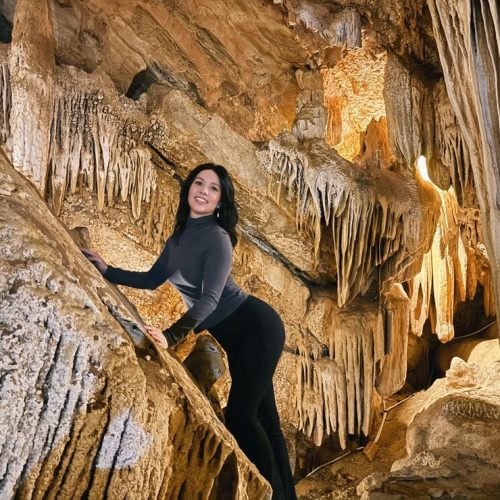
There is a small crack between the rock and the left-side of the temple, large enough to walk through. This is where Bich Dong takes on an otherworldly dimension. I passed through the gap that led to a large cavernous space and up through a big staircase cut into the rock. The stairs led to an even bigger chamber filled with stalactites. People come for the temples, but stick around for the geology.

Also inside was a large statue of Buddha and a large bell. Inscribed on the bell are Chinese characters that roughly translates to: “Ascended the mountain / With blessings and fate / Open the mountain, carve the stone / Pure air perpetuates.”
Thuong Temple – Upper Temple

Another steep set of steps – this time tighter, more worn – leading to the Thuong Pagoda, the oldest temple at Bich Dong, perched near the summit. Flanking the sides of the temple are two small shrines. One to honour the local deity, who is considered the guardian spirit of the land and protector of homes and communities. The other, dedicated to the mountain deity.
At this vantage point the views unravel across a panorama of Ninh Binh stretching out to the horizon, dotted with river channels, rice paddies, and karst peaks rising like jagged teeth. There’s nothing manmade in sight that doesn’t belong.
Know before you go
Religiously, Bich Dong is tied to Vietnamese Mahayana Buddhism, the most prominent religion in the country. It blends indigenous beliefs with Chinese Buddhism that can be traced back to Indian. The cave is especially significant – caves in this faith aren’t just physical spaces but symbols of the inner journey. To step into a cave is to step inward.
In Vietnam you will find a lot of temples and shrines built inside caves. (I will be posting more about other cave temple that I visited in Vietnam soon).
You might also like: Dambulla Cave Temple in Sri Lanka
How to visit Bich Dong Pagoda
Getting there: Rent a bicycle in Tam Coc and pedal past rice fields and mountains. The ride takes about 15–20 minutes, depending on how often you stop to admire the landscape. That’s the scenic way. You can also pick up Grab from almost anywhere or rent a scooter.
Entry free: Entrance is free, though a small donation at the temple is appreciated.
Best time to visit: Skip the crowds and come early in the morning.
Duration: You can stay for as long as you want, but typically, the whole thing takes around 1h 30m to fully explore.