Travelling from Bolivia to Chile overland is one of South America’s greatest journeys. From the moment the engine starts, every landscape feels borrowed from another planet.
Beginning in Bolivia’s surreal Uyuni Salt Flats and ending in Chile’s famous Atacama Desert, this overland border trip is not just about getting from point A to point B.
The space in-between is filled with non-stop sightseeing, coming face-to-face with volcanoes, giant cactus, pink lakes, flamingos and so much more.
If you’re thinking about doing this journey, you will absolutely not regret it. This extraordinary 3-day trip remains one of my top highlights across the whole of South America.
Here’s how to do it.
Quick overview to visiting Uyuni Salt Flats
– Why visit?
First of all, the Salar de Uyuni is the world’s largest salt flat, comprising of nearly 12,000 square kilometres of blinding white crust, formed from the evaporation of prehistoric lakes. Other countries do have salt flats but they all pale by comparison.
Beyond the salt flats, the nature throws up so much more nature and wildlife. The whole tour is truly a once-in-a-lifetime adventure.
– When to visit
The dry season (typically from May to October), the surface is cracked into perfect hexagonal tiles. In the wet season (typically from November to April), a thin layer of water transforms it into a mirror that reflects the sky.
Note: I went in early December and it never rained, not even once, so going in the wet season can be a bit like going in the dry season too. It’s hard to predict. Either way, both versions are extraordinary.
– Choosing a tour operator
When it comes to choosing a tour operator, take your time. This three-day Bolivia to Chile overland route is relatively popular, which means there is no shortage of agencies competing on price.
I would probably resist the temptation to book the cheapest option. The difference in experience between a well-maintained 4×4 with an attentive driver-cook and a crumbling Land Cruiser with a broken heater becomes very apparent at 4,500 metres.
If you have a relatively decent command of Spanish, you will have more options to book locally and find cheaper tours. If you need an English tour, I recommend booking in advance. You can take a look at options for available Uyuni tours online.
– Starting point: Uyuni Town
I recommend arriving the day before. You can either take a short (50-minute) flight down from La Paz or take the bus (typically 8 – 10 hours). If you’re short on time, it’s also possible to get a very early morning flight in time to start your 3-day tour on arrival.
Uyuni is a small, windswept town in southwestern Bolivia that has built its entire identity around the salt flat that surrounds it. Every hostel, every café, every tour agency exists in service of the salar.
The main square has a handful of decent restaurants serving quinoa soup and llama steak, and the markets along Avenida Potosi are worth an early morning wander.
Buy snacks, water, and anything else you might need. Check that you have warm layers and any precautionary medication. The body can sometimes feel the strain of the altiplano. Once you leave Uyuni your resources are limited.
Day 1: Train Cemetery, Salt Flats & Cactus Island
Train Cemetery
Our tour departed Uyuni in the morning, heading first to the nearby ‘Train Cemetery’. These 19th-century trains and locomotives once transported minerals and elements across Bolivia. In the 1940s they were abandoned and simply left to corrode.
Dwelling in the middle of the desert, they draw the attention of tourists looking for a quirky photo opportunity. It resembles a scene from a Mad Max movie, but one that feels (to me at least) spoilt by the crowds. Nevertheless, they do signal an interesting reminder of the region’s once booming mining industry.
The Salt Desert
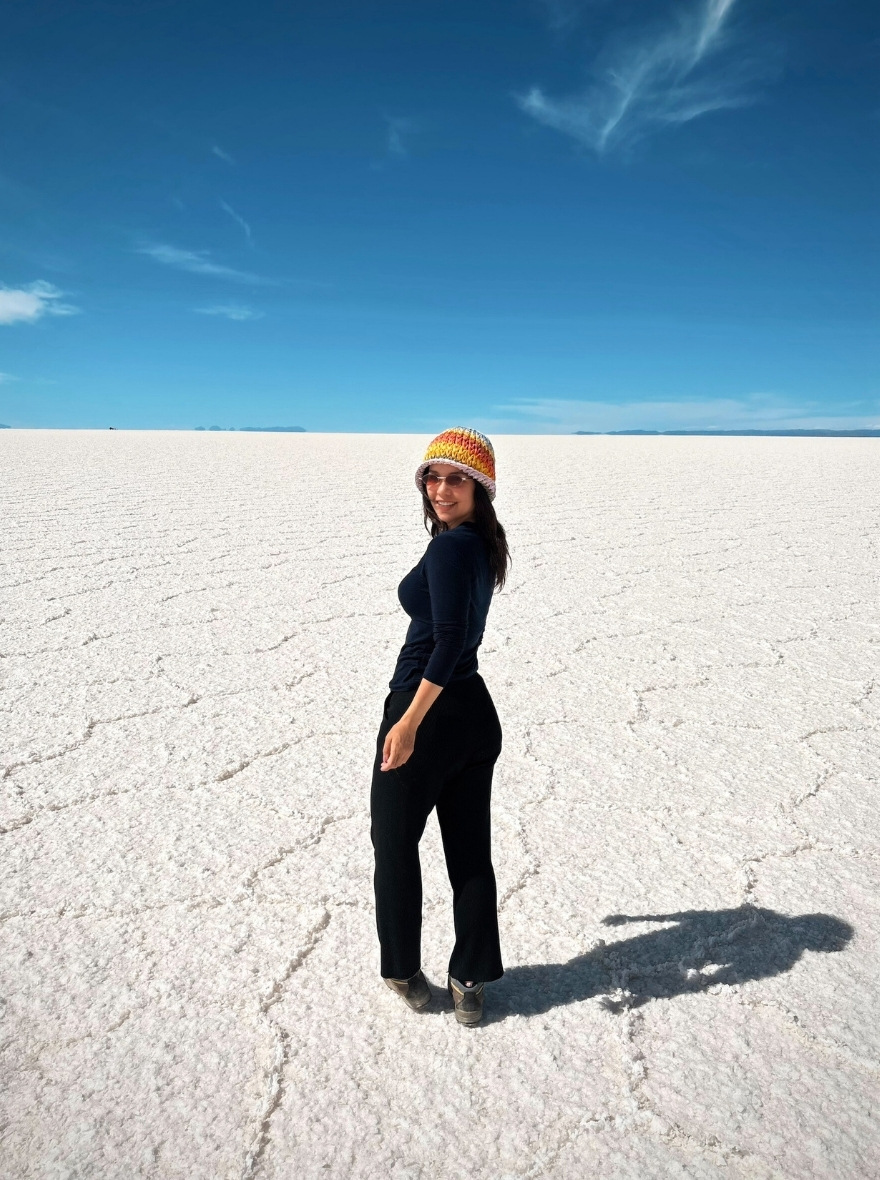
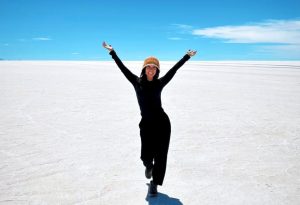
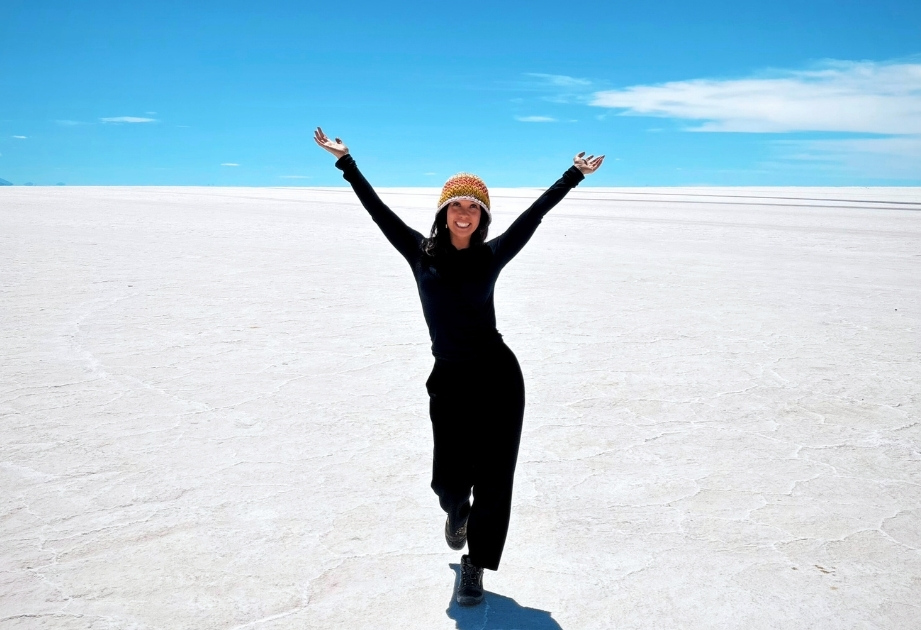
After a quick stop at Colchani Village to visit the a salt refinery and fuel up over lunch, we entered the salt desert. Despite seeing so many photos online, seeing it with my own eyes was an entirely different experience. No photo can capture the sheer enormity of the space. In every direction a dazzling white blanket stretched out as far as my eyes could see.
The whole landscape really made an impression on me. I would have sworn I was standing on snow but there were no footprints left behind, only a defiant crunching sound every time I took a step.
When I walked further out, it seemed like walking across an entirely different planet that I didn’t recognise as Earth. Without another landmark in sight, and no definable roads, I wondered how the tour guide could keep his bearings without getting lost. None of it made sense in the best possible way.
Isla Incahuasi (cactus island)
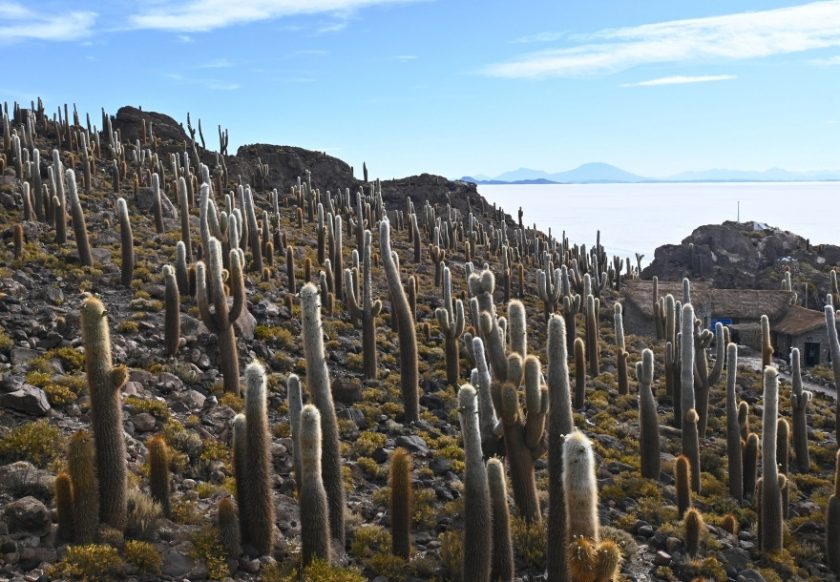
After taking lots of photos we headed to Isla Incahuasi, a rocky outcrop rising from the middle of the flat, covered in towering cacti. It’s a wonder how they not only grow here but thrive. Many tower above me, three times my height, indicting that their presence on Earth has been far longer than mine.
Climbing to the top of the island takes about twenty minutes. You pass all of these prickly, phallic-shaped oddities that are both absurd and impressive. The view from up there is one of those sights that you never forget. It’s too odd and too surreal to forget.
Overnight in a salt hotel
Eventually we arrived at our guesthouses built from salt bricks. I was prepared so something much more rough around the edges but it was surprisingly comfortable and well equipped – a bed, a shower and a communal dining room. What more do you need? It’s not luxury, but it’s more than enough.
There is something about lying in a salt-brick room at the edge of the world that feels like a genuine privilege.
Day 2: Coloured Lagoons and Flamingos
After a big breakfast, we left our hotel at around 7am, ready for another day of adventure. The flat gives way to the southern altiplano: a high, cold desert of rust-coloured rock, dormant volcanoes, and coloured lagoons.
Below are my highlights from this day:
Salvador Dali Desert
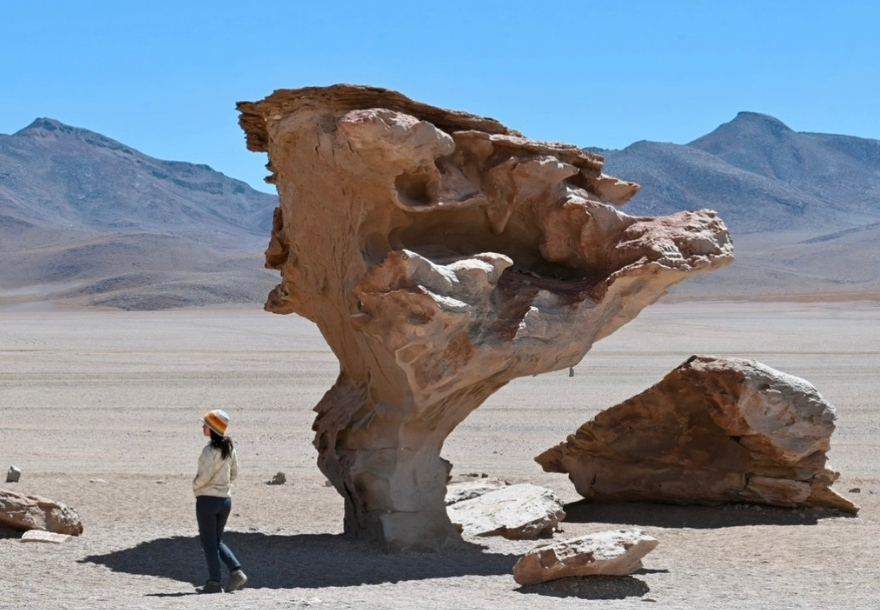
The first part of the day brought us to many rock formations with my favourite being nicknamed the Salvador Dali Desert due to its surreal rock formations. The wind can be extremely harsh and volitale, particularly at almost 5000m above sea level, shaping the rocks in strange ways.
I’m struck by one rock in particular. It reminded me a tree blowing in the wind that had been fossilised in solid rock. How could something be so stationary have so much movement? Again, I find myself scratching my head asking, how? Forget Dali, Mother Nature really is the greatest artist.
Flamingos at Laguna Hedionda
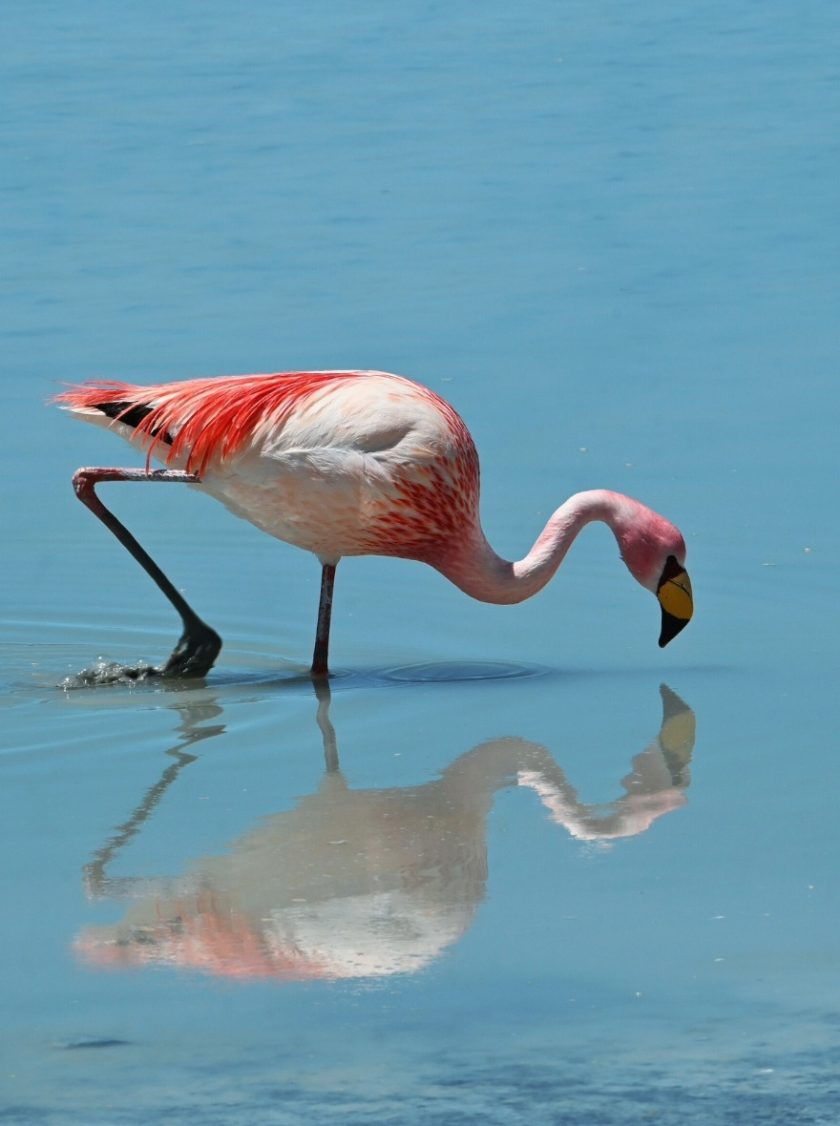
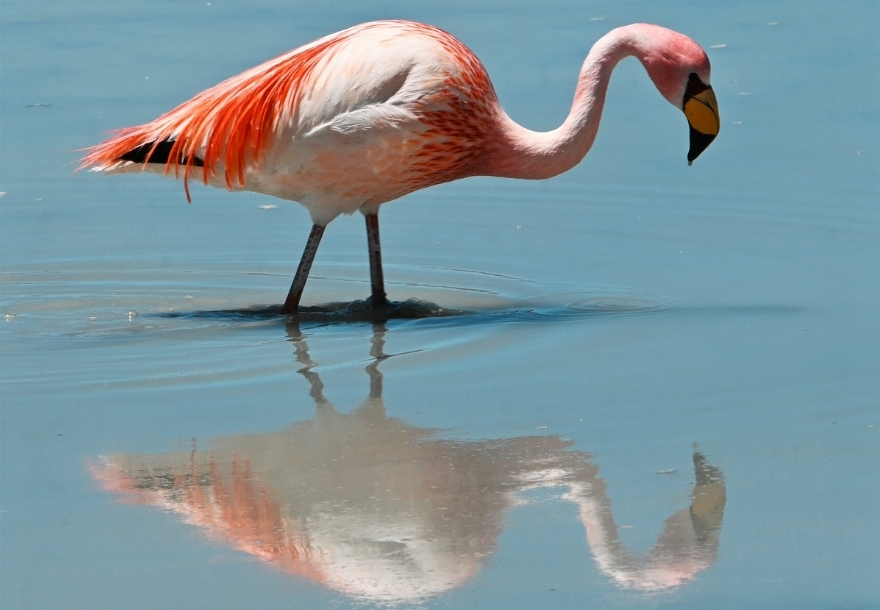
I spotted flamingos in all of the lakes I visited on this journey, but Laguna Hedionda seemed to be the chosen favourite among these striking pink-legged birds. Amusingly, the name of this lake translates to ‘Stinky Lake’ but I’m disappointed to report that it smelt fine – which was probably for the best.
The flamingos are drawn to the rich microscopic life, especially algae and tiny crustaceans such as brine shrimp. These organisms thrive in the lake’s salty, mineral-rich water, and they form the main diet of flamingos. The birds filter this food from the water using their specially adapted curved beaks.
Fun fact: Interestingly, flamingos are not born pink. Young birds hatch with grey or white feathers. As they grow and continue eating carotenoid-rich food, their feathers slowly turn pale pink and eventually bright pink.
Laguna Colorada
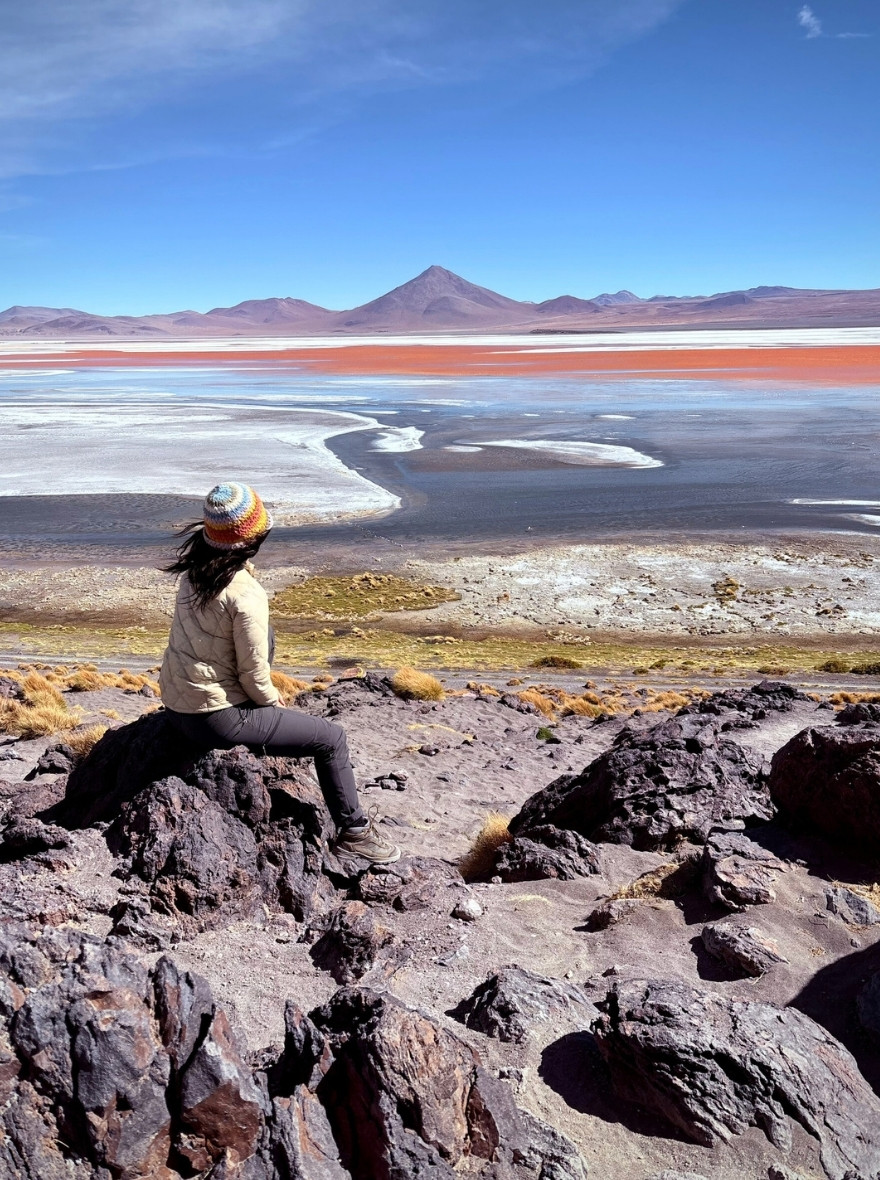
Finally we reached Laguna Colorado (Red Lagoon), our last attraction of the day. I climbed over to a craggy outcrop of basalt rock and stood above the lake, captivated by the juxtaposition of the pink and red water against a backdrop of snow-capped volcanoes.
I could have stayed there forever just watching flamingos and following the movements of the water, but the wind was brutal. At this altitude it bites and bullies you. I dug my feet in the ground and stayed a little longer to savour the sight, realising that I might never be in this place again.
Accommodation
To finish the day, we arrived at our refuge near the lagoon. The hostel was basic, with only 3 hours of electricity at night, but that was all part of adventure. We ate a deliciously hearty meal and went to bed full and early.
Day 3: Geothermal field, hot springs & border crossing
Our final day began early at the brutal hour of 4am. I can’t say I was enthusiastic about starting so early, but it came with a wonderful consolation prize. As we stepped out from our hostel there was a collective gasp at the millions of stars that glowed above our heads.
Bubbling mud pools and geysers
I soon discovered the decision for an early start was not a sadistic choice – the Sol de Mañana geothermal field is best seen in the cold early hours, when the steam columns rise most dramatically against the dark sky.
We drove up to 4,850 metres above sea level, bundled out of the jeep, and stood at the edge of a field of bubbling mud pots and roaring fumaroles which hissed and groaned.
The sulphur caught my throat, and the accompanying smell bought back fun memories of visiting both Seltun and Hverir geothermal areas in Iceland. Actually, if you’ve been to Iceland before, you will note similarites in the landscape. There’s lot of volcanic energy, you just have to swap Iceland’s sheep for Bolivia’s alpacas!
Aguas Termales – natural hot springs
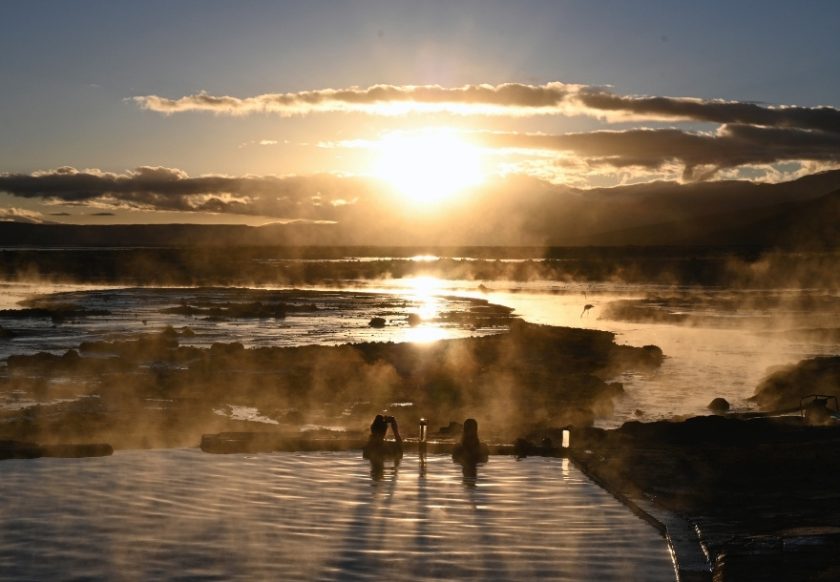
A short drive from the geysers brought us to the Aguas Termales – natural hot springs perched on a hillside overlooking a sweep of altiplano desert.
The idea of lowering myself into warm, mineral-rich water at sunrise could not have been more welcomed. I sunk myself into the warm water and admired the view of volcanoes in the distance. What a perfect way to unwind after the whirlwind of the past few days.
Crossing the border from Bolivia to Chile at Hito Cajón
After lunch, we departed for the crossing from Bolivia into Chile at Hito Cajón. First we got our passport stamped at the Bolivian exit booth and then proceeded to the Chilean entry post a few kilometres further on.
It is one of the highest land border crossings and feels like no man’s land. Here, we bid our guide farewell, thanked him for everything, and jumped onto a pre-arranged bus to take us to San Pedro de Atacama.
Crossing the border was straightforward – Bolivia exit stamp, Chile entry stamp. The night before our guide send us a link to fill out some digital forms and all we needed to so was show the QR code. There was a bit of a queue at the Chilean border so the whole process took around an hour in total.
Once that was over, we made out why to San Pedro. Immediately the first thing I notice was the difference in the roads. In Bolivia, the roads were mere dirt tracks, but in Chile they were smooth and made of tarmac. The difference was like night and day.
In a way, I already longed to be back on those dusty dirt roads. To me, they symbolised adventure. My time in Bolivia had been full of so many surprises and so many extraordinary landscapes, I wanted to stay on to see more.
Fortunately, the Atacama shares a lot of similarities, though its a little drier, warmer, and more ochre than rust. You can feel the altitude gradually dropping from 4500 metres to 2500 metres. The world becomes, very gradually, less hostile, and I suppose a little more welcoming.
Arriving in San Pedro de Atacama
Our bus dropped us off in San Pedro de Atacama, a small town that serves as the Atacama’s base camp. After three days in the altiplano, San Pedro feels almost luxuriously comfortable: the air is warmer, the altitude is a more manageable, and the town’s adobe streets are lined with good restaurants and plenty of shops.
We stayed at Ickota B&B which had everything you could need and more. After several nights of waking up tormentingly early, I enjoyed nothing more than waking up naturally without an alarm clock before heading out to explore the surrounding region.
My favourite moment in the Atacama Desert came under the sky on a stargazing tour. I caught a glimpse of the Milky Way a few days earlier near the salt flats, but this time I got to do it with expert guides. For more information, I’ve written a separate report of my experience stargazing in the Atacama Desert.
San Pedro is a destination in its own right. But arriving overland, through the salt flat and the coloured lagoons and the freezing refugios and the border at 4500 metres, gives it a particular savour.
The overland journey from Bolivia to Chile is an absolute must for anyone wanting to see the wild beauty of South America. At times it can be a little uncomfortable, but the reward is huge.