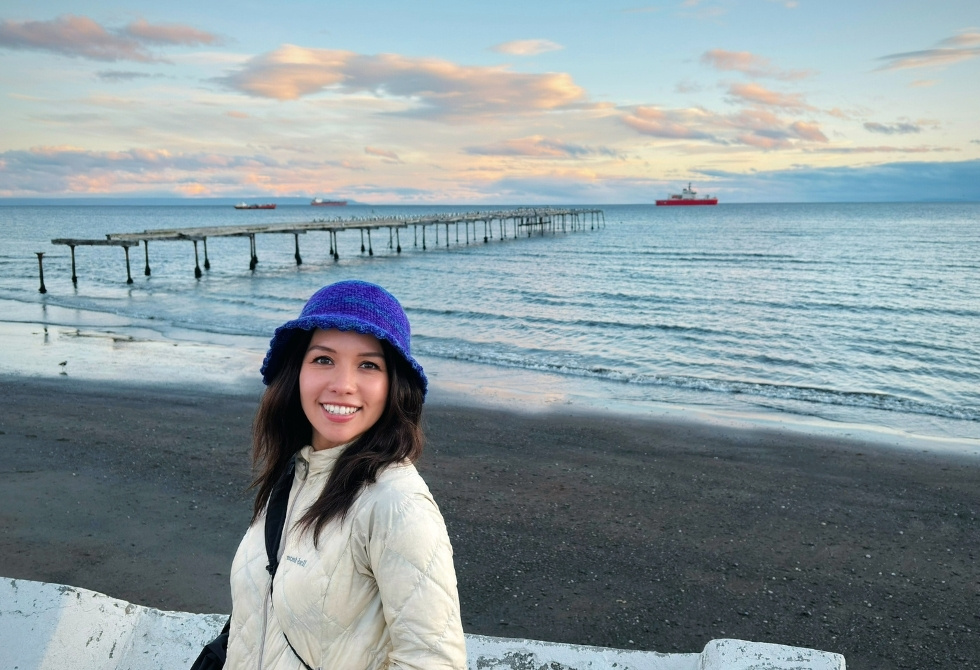
The largest city in Chilean Patagonia, Punta Arenas has a long and storied history. The city established itself in the mid-19th Century as a fort to defend the territory and assert control over the Strait of Magellan, a global trading corridor serving vessels crossing between oceans.
Its importance declined after 1914, when the Panama Canal opened and provided a much shorter route between the two oceans. Today, the economy centres mostly around energy production, wool, fishing and tourism – being a gateway to both Torres del Paine National Park and Antarctica.
As you walk around Punta Arenas, you will see echos of bygone prosperity in the historic centre, but for the most part, practicality comes before aesthetics. I wouldn’t call the city conventionally beautiful and nor does it need to be to enjoy what it has to offer.
Dress to brace the elements
The first thing that greets you will probably be the wind. This is Patagonia after all and you don’t come here to sip cocktails on the beach. Here, on the southern fringe of South America, where the continent frays into fjords and glaciers, you come for the adventure, the pristine nature, and the feeling of wilderness.
This is not to say that you can’t walk along the beach or sip a few cocktails, but you probably won’t be doing it bare-foot in your suit-wear unless you’re slightly mad. In Punta Arenas, you will and must dress appropriately for whatever the weather decides to throw your way.
This means mastering the art of layering. Pack a rain coat, insulated jacket, woolly hat, base layers and suitable footwear. You might not need to wear them all, but it’s good to be prepared.
How long should you spend in Punta Arenas?
I spent two nights in Punta Arenas and I think this is a good length of time before heading to Torres del Paine. It gives you enough time to explore the town, enjoy some restaurants and venture out onto the Strait of Magellan by boat.
I visited the penguins on Isla Magdalena, but if you want to embark on another day-trip you would probably need three nights.
An extra day would allow you go whale-watching or give you some wiggle-room incase any tours have to be postponed due to bad weather. It really depends on how much time you have spare, but a minimum of two nights should allow you to fit in the majority of attractions if the weather holds up.
Explore the historic centre
Start in Plaza Muñoz Gamero. It’s the kind of square that feels improbably well-kept considering what lies beyond it: the Strait of Magellan, grey and restless.
This is where European ambition collided with geography. When Ferdinand Magellan threaded his ships through these waters in 1520, he changed global trade. For a few shining decades before the Panama Canal, Punta Arenas was rich, extremely rich on wool and maritime traffic.
The evidence still stands in the mansions lining the square. Step inside the Palacio Sara Braun, once home to the city’s wealthiest women, and you’ll see chandeliers and parquet floors that tell the tale of sheep fortunes and imported European taste. It feels faintly surreal this far south.
Greet penguins on Isla Magdalena
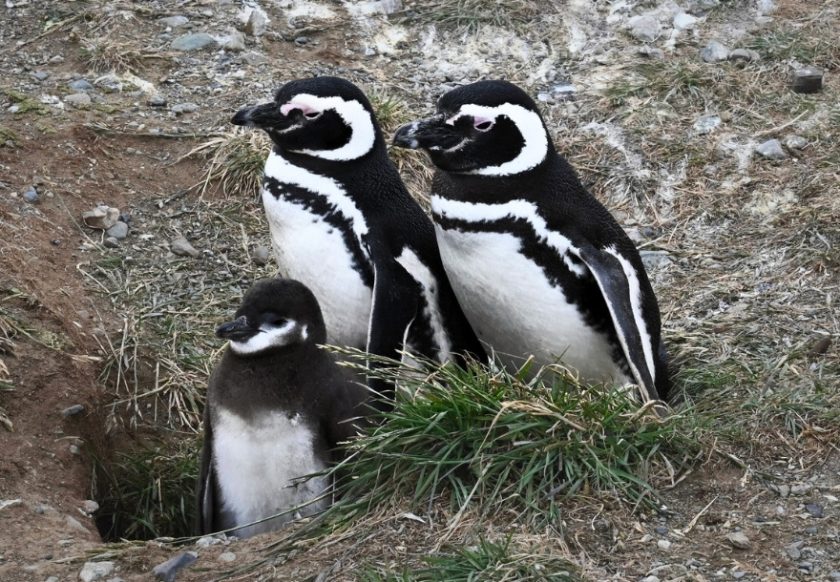
The real show and draw of Punta Arenas is offshore. An hour by boat takes you to Isla Magdalena, home to thousands of Magellanic penguins.
A few years earlier, I visited Martillo Island on the Argentinean side of Patagonia and loved seeing the penguins in their natural habitat so I jumped at the chance to do something similar. There were even more penguins on Isla Magdalena so the expense was justified!
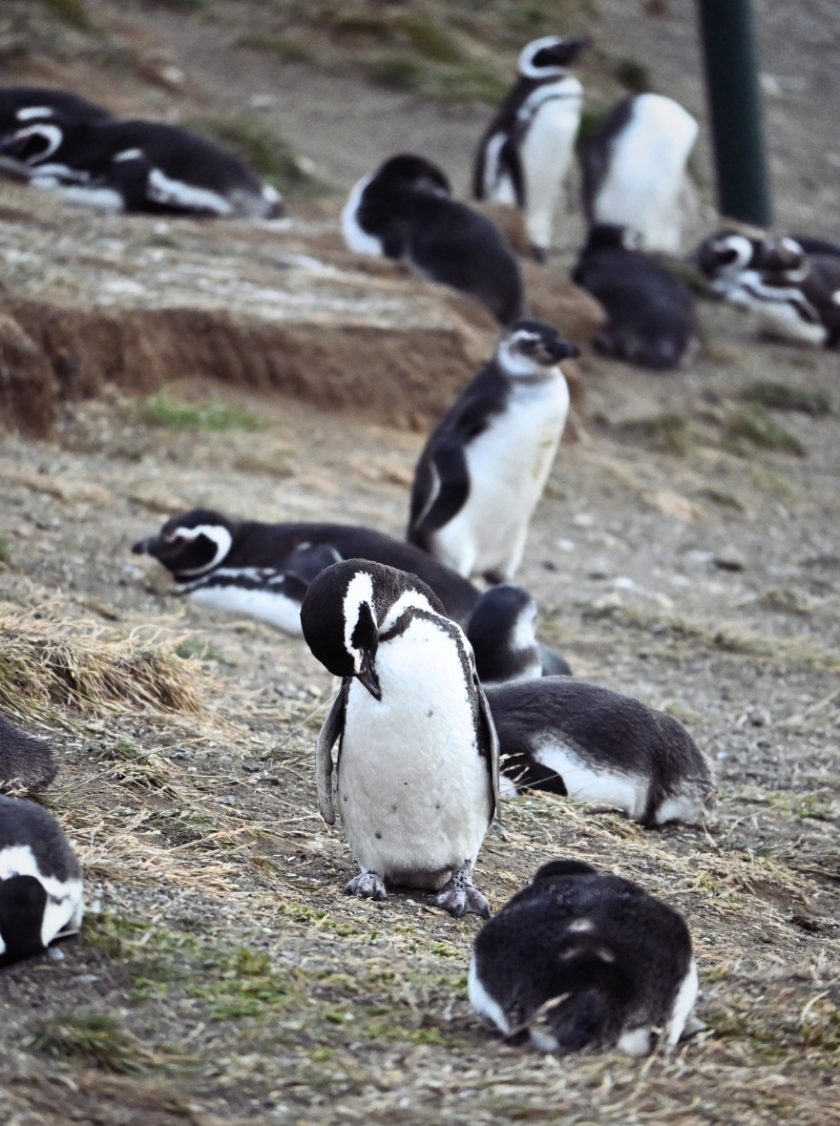
They waddle. They stare. And occasionally will approach you to see what you’re all about. You, of course, keep a considered distance to ensure the protection of wildlife.
You walk a roped path while they shuffle past, utterly unconcerned. It’s less ‘majestic wildlife documentary’ and more ‘chaotic commuter platform with feathers.’ And that’s the charm.
The wind never stops but watching these birds endure it makes your own discomfort pale in comparison. The most difficult part of the tour is actually the 1-hour boat ride to get there. It’s super choppy so do bear that in mind if you suffer from sea sickness. You might wish to take a tablet beforehand.
After spending an hour walking through the island, you hop on the boat again to nearby Isla Marta to spot sea lions. You stay onboard the boat for 20 minutes to watch them before returning back to the shores of Punta Arenas.
If you’ve never seen penguins in the wild before (and even if you have), I would definitely recommend booking this trip. All the guides were extremely warm and knowledgeable.
Walk along the waterfront promenade
If you’re anything like me, you’ll enjoy a cool, crisp walk along Punta Arenas’ seafront promenade. When the weather is good and the tide is low, you can venture further onto the beach and maybe dip your toes inside the chilly waters. I wouldn’t recommend taking a dip unless you get a kick out of cold water swimming! If that’s you, I’m filled with admiration but I’m too much of a wimp for that.
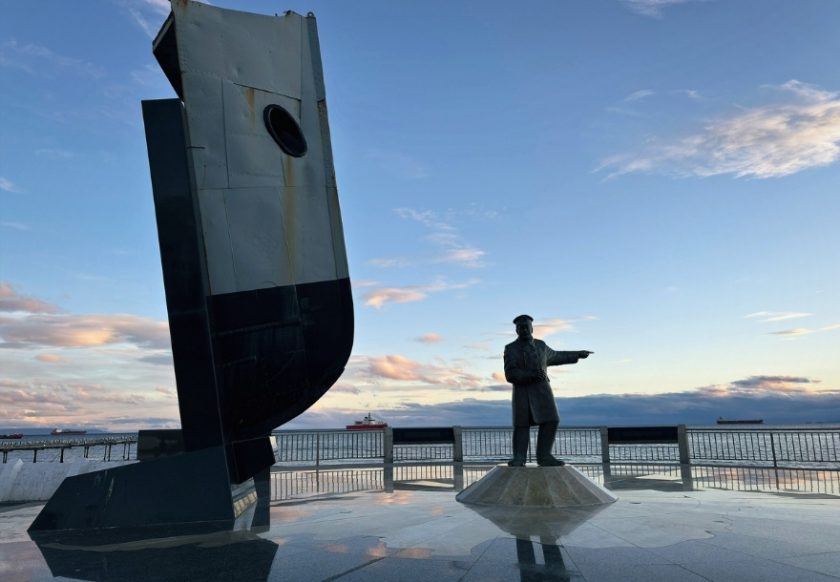
As well as the sea views across the Strait of Magellan, there are some visually striking sculptures installed along the promenade. Each sculpture differs significantly in appearance and style, and celebrate an event or topic relating to the town’s history.
The most imposing monument is Monumento a Tripulantes de la Goleta Ancud. It honours the crew of the Chilean schooner Ancud, which, in 1843, sailed into the Strait of Magellan and formally established Chilean sovereignty over this strategic waterway.
This expedition was a turning point in the territorial claim of southern Patagonia. At the time, the Strait of Magellan was one of the most important natural passages for global navigation, long sought after by explorers, empires and traders. By planting the Chilean flag and establishing a settlement near what would become Punta Arenas, the Ancud crew helped secure Chile’s control over the region.
Visit Museo Nao Victoria
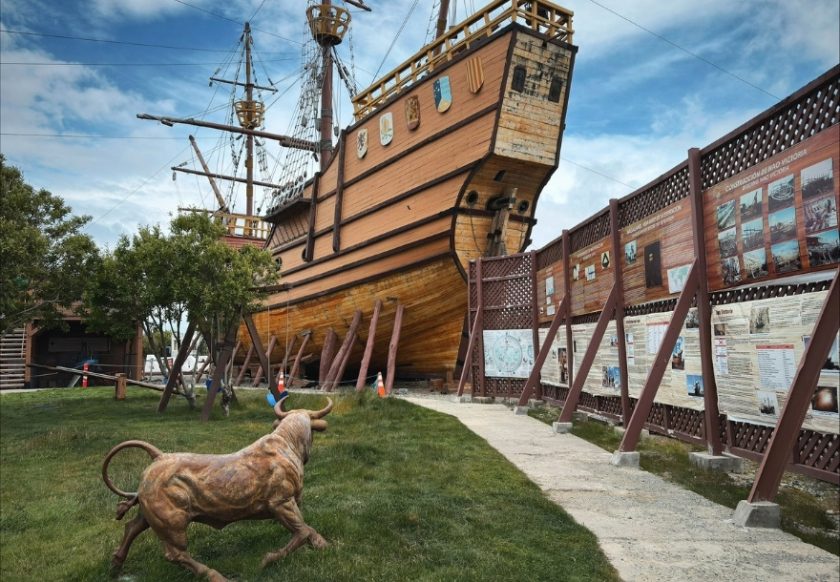
This fabulous collection of life-size ships was my favourite museum in Punta Arenas. It’s an interactive museum, allowing you to climb onboard to relive the history of the great navigators and explorers of the region (Magallanes, Williams and Shackleton).
These reconstructed ships feature sailing equipment, hand-carved mannequins, clothing and weapons from the their age. You will also find plenty of information about the lives of these explorers and the expeditions that made them famous.
Amusingly, most of the texts seem to be taken word-for-word from Wikipedia. Nevertheless, this doesn’t detract from the enjoyment of the museum and the impressive undertaking that went into building these ships.
It’s located about 20-minutes out of town by car in a very scenic area with fabulous views of the waters. You’ll also be able to spot the shipwreck of Lord Lansdale which drums home the dangers of sailing in this region.
Open: Daily 9am-6pm
Catch the best views at Mirador Cerro de la Cruz
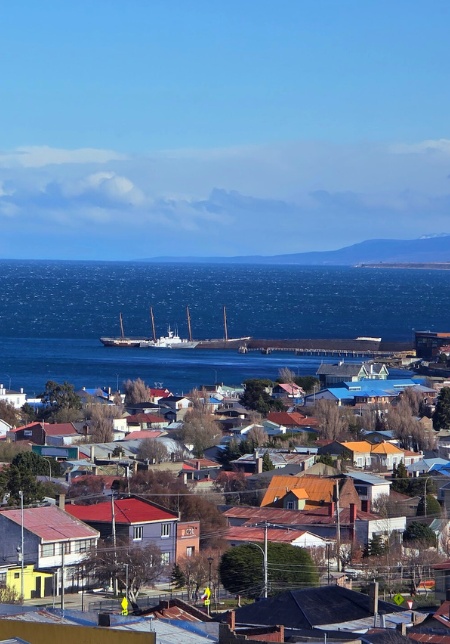
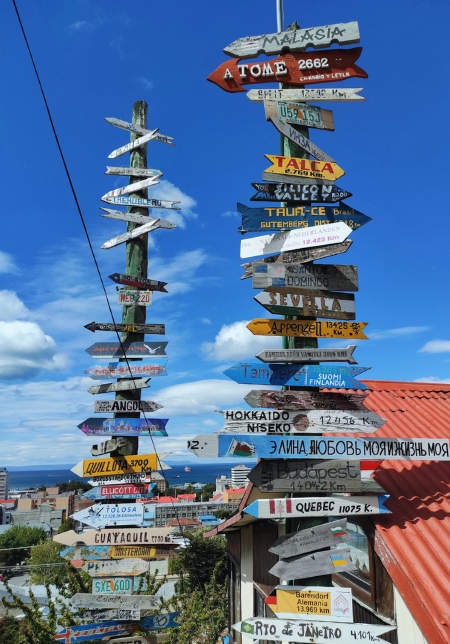
For the best panorama of Punta Arenas head to Cerro De La Cruz. Situated just a short walk from the city centre it offers sprawling views over the city and out towards the bay.
The viewpoint is easy to reach by foot, passing some of the city’s beautiful murals along the way. I recommend heading there for sunset or just anytime there’s a window of blue skies and sunshine.
The viewpoint is large enough to sit down on one of the benches to take in view of colourful rooftops, mosaics artworks, and surrounding nature at your leisure.
Experience modern regional cuisine at Aima Restaurant
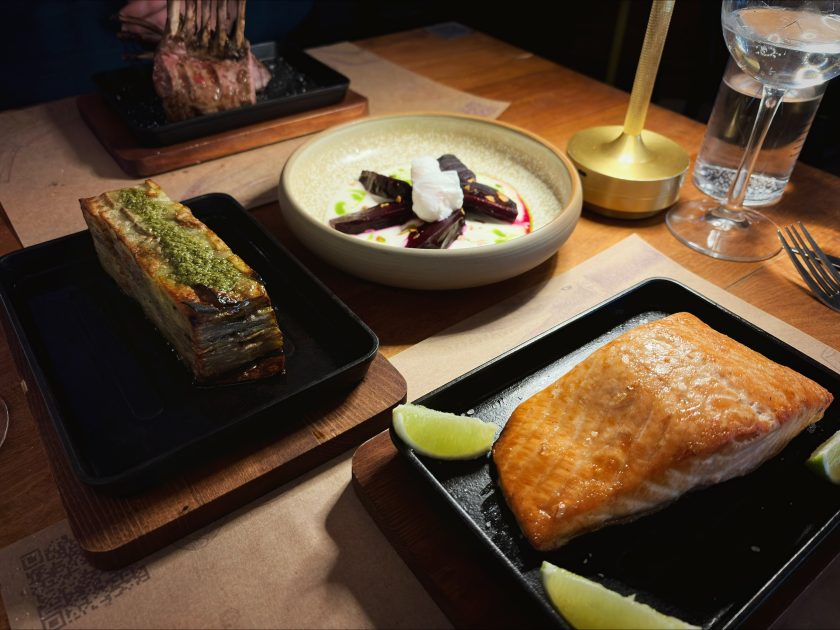
Loosen your belts, it’s time to indulge! The best meal I had in town (and proably the whole of Chile) arrived at the table of Aima Restaurant. Newly opened in 2025, this place aims to impress and delight in every way.
If you enjoy modern regional cuisine and carefully sourced, fresh ingredients accompanied with excellent Chilean wine, Aima is the place to treat yourself in Punta Arenas. The seafood and lamb dishes had that melt-in-the-mouth quality that made me want to kiss the chefs. And the desserts made me almost want to lick the plate. The only disappointment was that I couldn’t continue eating. I suppose all good things come to an end, alas!
Visit Museo Maggiorino Borgatello
This museum serves as a bridge between indigenous heritage, missionary influences and natural history. I’ll first say that the museum could definitely do with some modernisation, particularly in light of renewed conversations around colonialism.
The strength of the museum lies in its wide and varied artefacts relating to natural history, anthropology, Antarctic expeditions and energy use in the Patagonia region.
I particularly found interesting the animals of the Magellan region and exhibits of the HMS Beagle on which Darwin travelled. At times it feels like a time capsulate, transporting you back in time to age of Antarctic discovery.
I don’t think it would take much work to improve some of the texts to make this a very, very good museum. Nevertheless, if you’re curious about how humans and nature have interacted in this extreme corner of the world, this museum is a rich (and sometimes surprising) stop on your Punta Arenas itinerary.
Explore Punta Arenas cemetery
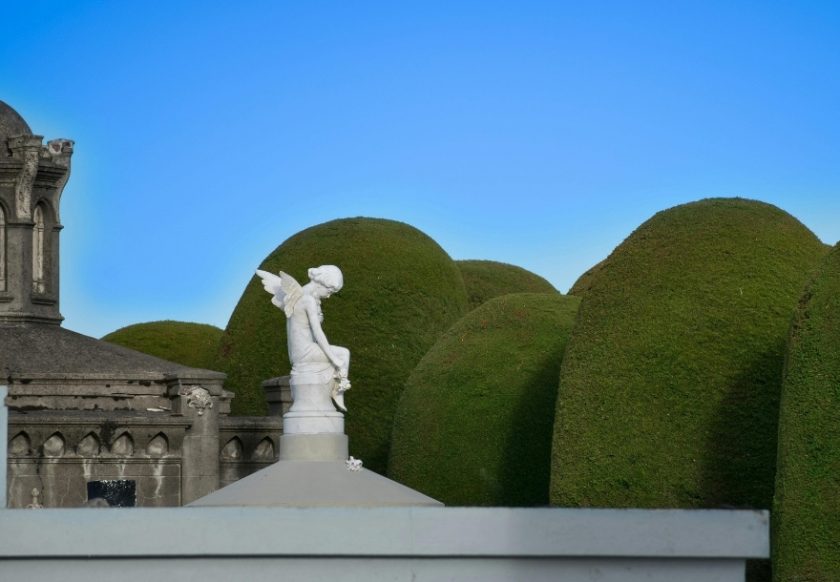
When I first arrived in Punta Arenas and the man at the information centre pointed out the cemetery to me, I was somewhat surprised. A cemetery isn’t a typical tourist activity. However, saying this, I’ve written about several cemeteries around the world so maybe I’ve just proved myself wrong! (If you’re interested here are a few fascinating cemetery visits from my travels in Japan, France, Argentina and Guatemala).
Upon entering the cemetery you will find immaculately pruned cypress trees, elaborate mausoleums and sculptures. Most interesting are names in Croatian, English, Spanish – highlighting the immigrant story of Patagonia.
The cemetery truly stands out for it’s beauty. It’s incredibly well-maintained and although small, it has several notable people buried inside. The most interesting of which is the tomb of the Indio Desconocido or unknown Indian.
This indigenous man was found dead in 1929 on the Island of Diego de Almagro after an altercation with Chileans quarrying land. He was brought to rest in the Punta Arenas cemetery and soon after rumours circulated about his miraculous powers. In 1969, using money donate by the public, a bronze statue was erected by his tomb. Today, people leave him gifts and his tomb has become a landmark of indigenous remembrance.
Whale and glacier watching from Puntas Arenas
Unfortunately I didn’t have time to fit this in, but one of the most memorable wildlife excursions you can take from Punta Arenas is a full-day glacier and whale-watching trip. The tour journeys into the remote fjords of the Strait of Magellan and the surrounding Patagonian archipelago. It’s a long day – starting at 4am – but it’s often described as one of the most spectacular nature experiences in southern Chile.
Most tours travel to Francisco Coloane Marine Park, a protected marine area west of Punta Arenas. This park is famous spot for humpback sightings as well as sei whales, dolphins, sea lions and elephant seals. It’s also rich in birdlife, with a high population of albatrosses, cormorants, petrels and penguins.
Many tours continue to a glacier in the Darwin Range, often the Helado Glacier, where the boat approaches dramatic blue ice walls descending into the fjord.
Visit Torres del Paine National Park
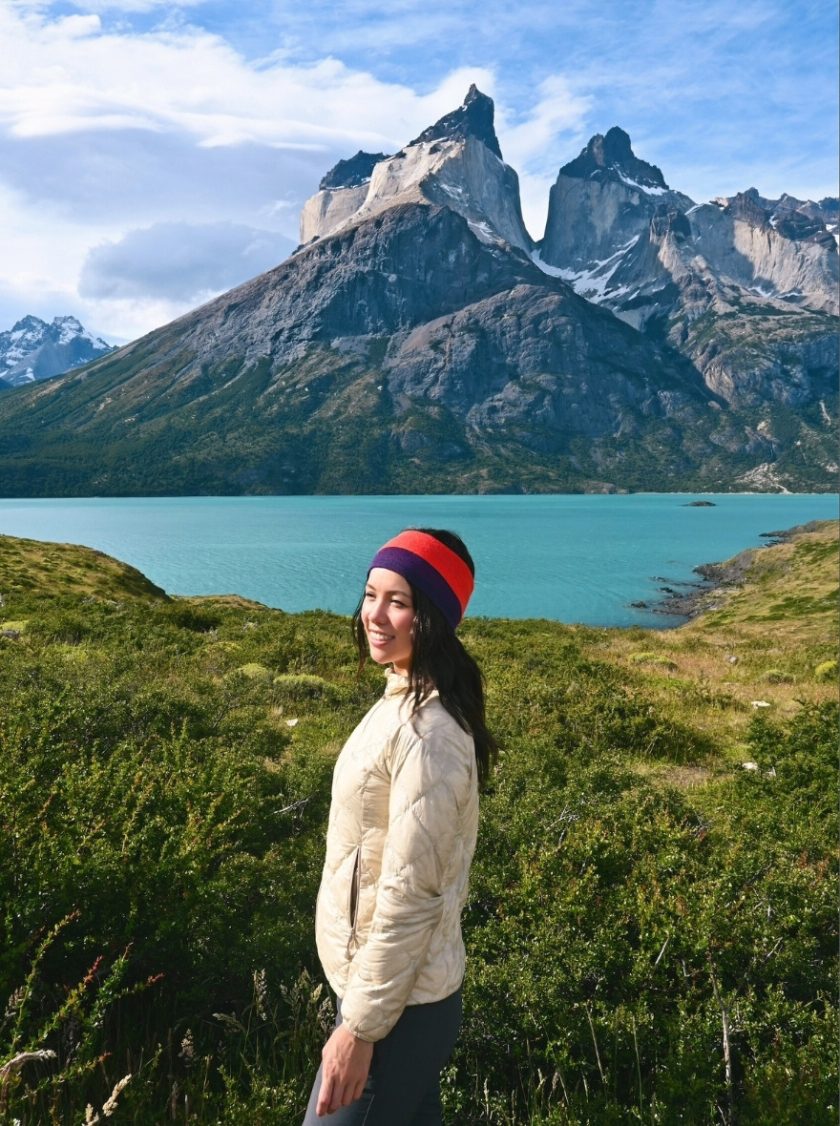
For many international travellers, Punta Arenas is the gateway to Torres del Paine. You simply cannot travel all the way to Punta Arenas without going to Torres del Paine.
I’ve been to Patagonia a few times, and while I don’t think it’s necessary to hire a car on the Argentinean side, I definitely recommend hiring a car to visit the Chilean side. Torres del Paine itself is full of majestic lakes and panoramas that really lends itself to having a car. The park is huge and having a car ensures you see as much as possible. There are plenty of places to park up to enjoy both short and long hikes.
The lakes are truly something different in Torres del Paine. The water glows with the most beautiful shades of green and blue. The views will forever be imprinted to my memory.
Coffee and sweet treats at Vaho
There are plenty of cafes in Punta Arenas, but less so that specialise in coffee. I tried a few places, and Vaho definitely came up top. Having been away from home for many weeks at this point I was really craving some decent coffee. It was also the only place in town where I found alternative milk.
It’s a bit pricier than other cafes in town, but the quality ingredients are a cut above the rest. There’s also a selection of delicious cakes and pastries. My vote goes to the pistachio bun. Yum!