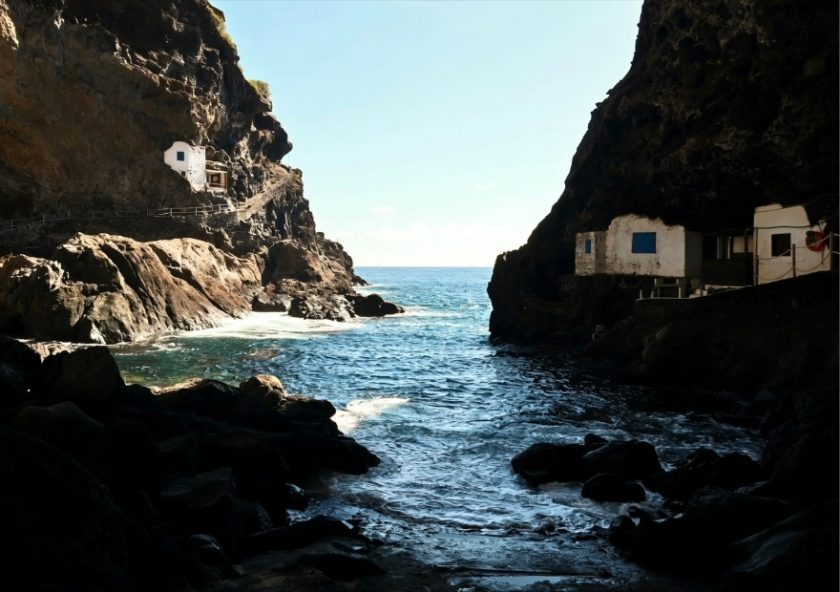
When I was looking at places to visit in La Palma, one place stood out above all the rest: Poris de Candelaria.
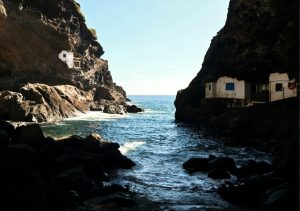
They say a photo speaks a thousand words, and all it took was one photo of this white-washed fishing village built inside a natural sea cave to convince me to go. The only question left was how to get there.
During my research, I read time and time again that driving there was very difficult, reserved only for extremely confident drivers. My boyfriend and I took this as a warning, opting to put our faith in our feet as opposed to four wheels.
Despite the efforts of getting to Poris de Candelaria, it’s absolutely worth fitting into any trip to La Palma. Now that we’ve done the hike and seen the roads, we’ve concluded that driving there doesn’t actually look as bad as it sounds.
However, hiking to this secluded sea cave does give you a certain peace of mind providing your knees are holding up well. Secondly, all the nature that greets you along the way ramps up the fun factor.
Since I couldn’t find a very detailed explanation of how to visit Poris de Candelaria, I’ve written up this blog post that covers the hike, the alternative driving route, and what you can do when you finally arrive.
Practical Information
A few things worth knowing before you go:
- Trail: PR LP 12.2, starting from Tijarafe
- Distance: Approx 8.5 km round trip
- Elevation: Approx 700m descent to the coast, same ascent on return
- Difficulty: Although not a long hike in length I would still say its quite strenuous due to the exposure, rather steep and significant elevation change
- Time: Duration hiking approx 3 – 4 hours in total. Be sure to factor time in at the cove.
- Best time to start: Early morning because the return climb in full afternoon sun is brutal
- Footwear: Proper hiking boots with ankle support strongly recommended
- Trekking poles: I didn’t bring mine but I would recommend them to take the pressure off your knees
- Water and food: Bring everything you need because there is nothing available at the cove. Pack approx 2 litres of water to be on the safe side
- Getting to Tijarafe: ~50 minutes by car from Santa Cruz de La Palma via LP-3
Starting in Tijarafe
Tijarafe is a small but picturesque town with lovely views across the Atlantic. Free parking is available in the town, and for convenience I recommend parking at the Visitor Centre.
We popped inside and the lovely lady there give us a map and answered any questions we had about the hike. She advised us to follow the trailhead for PR LP 12.2 , adding that it was the quicker but more challenging route.
She also stated that we could take an alternative route back with the possibility of getting a bus for the final section into town if we were too tired. It was reassuring to know I had a back-up plan if my energy levels took a nose-dive under the sweltering heat.
Conveniently, once you exit the Visitor Centre, the trailhead isn’t far, after you cross the road and turn right in the direction that takes you away from town.
The trail to Poris de Candelaria: PR LP 12.2
The upper section
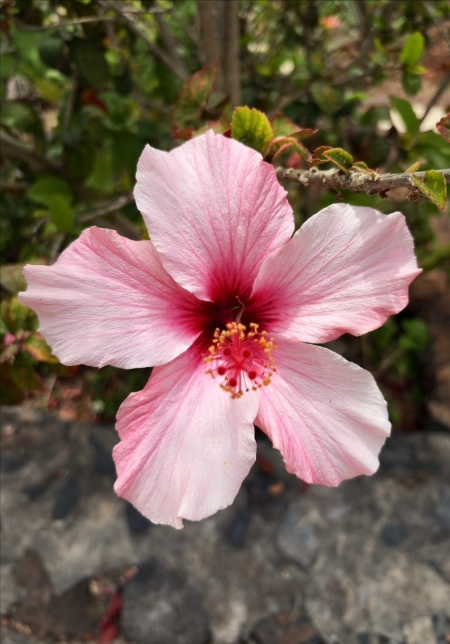
The trail begins by skirting the upper edge of the Barranco del Jurado, a classified Protected Natural Area. After passing some charming homes, the upper part of the trail passes through old farming terraces.
Keep an eye on the signposts and markings because it’s easy to mistake one of the private garden paths for the proper trail. If you’re uncertain, spotting some well-planted flowers is a usual give away that you’ve probably ventured onto someone’s private land!
The Canarian tradition of terrace farming on almost impossibly steep hillsides is everywhere on La Palma, but it’s particularly beautiful here. Banana plants, vines, and subtropical vegetation compete for space along the upper slopes. The most surprising element for me were all the delicate wild shrubs which I never would have expected to thrive under the exposure of the sun.
If you’re lucky, as I was, you’ll spot the Western Canaries Lizard, noted for their startling blue cheeks. Pay attention to the ravine walls for flashes of blue popping up and between the cracks.
The lower section
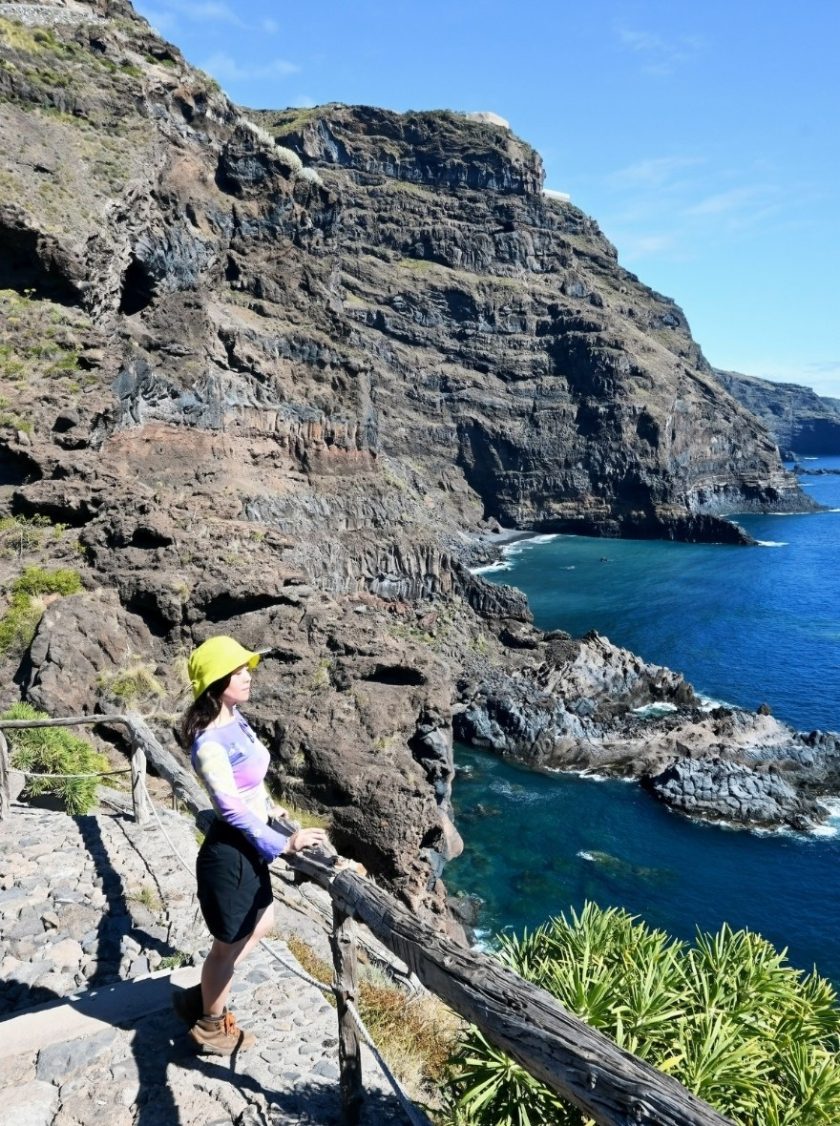
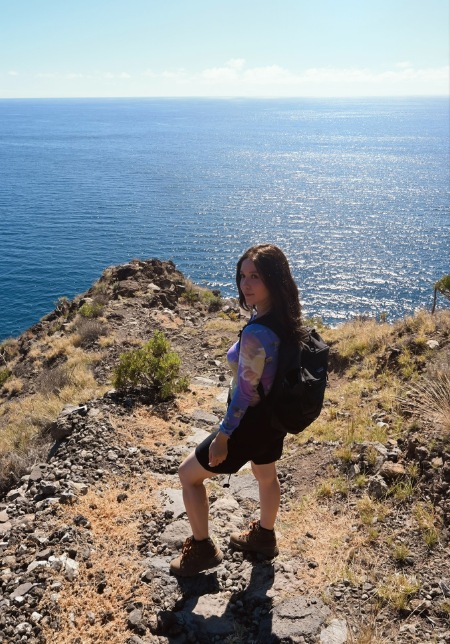
Finally, the majestic ocean comes into view like a gift from God. The decent intensifies but I enjoyed this section more for two reasons. Firstly, the path is much more well-defined and I was grateful to know that I was definitely on the right track! Secondly, the views are spectacular, particularly when the cliff edges begin to appear.
The lower part consists of steep switchbacks on a zig-zag path with views down some hundred metres to the sea. In this section, we also noticed a car coming down in the distance via the road which didn’t look half as bad as I had imagined. Under the heat, it certainly made my boyfriend and I question our decision about leaving the car behind!
Anyway, at the end of the trail, turn right and continue. The trail goes further down and suddenly, right in front of you, a spectacular view of the little houses under an overhanging big rock appears like straight out of a movie.
Congratulations, you’ve made it to Poris de Candelaria!
Arrival at Porís de Candelaria – the cave village
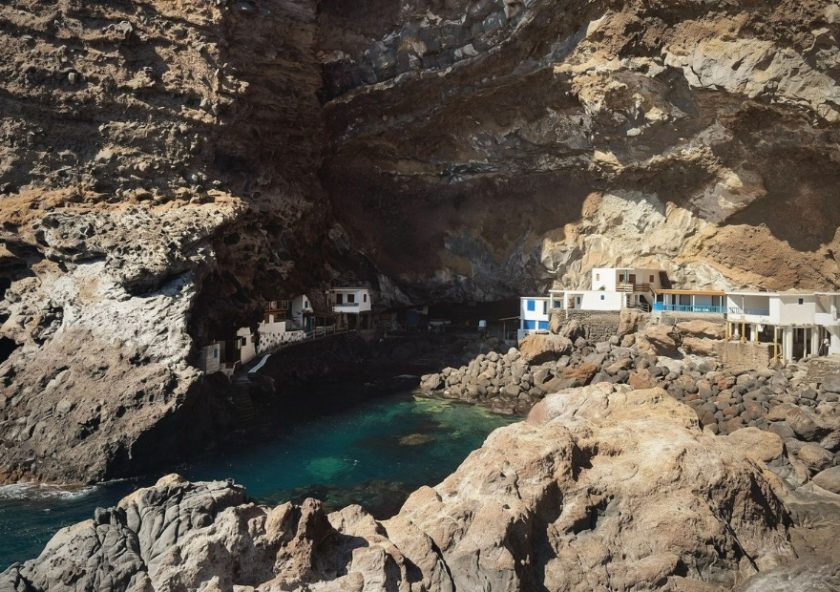
Somehow it was bigger than I imagined. Seeing a two-dimensional image on screen did not convey the scale of this place. And yet, at the same time, it felt incredibly intimate, a million miles away from the next town.
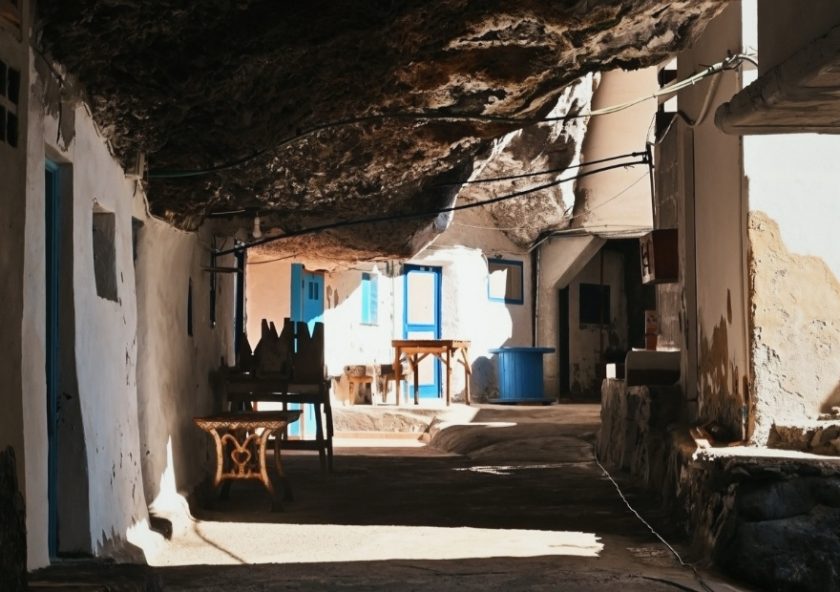
Around 15-20 houses are built inside and around the cave at Poris de Candelaria, some of them over 80 years old, and ocassionally still used seasonally by local families.
I wandered around the natural arch of cove and marvelled at the surface of the rock above my head and the buildings. Shards of sunlight shone down between cracks in the overhanging rock and made wonderful angular patterns of light and dark across the surface of the dusty stone floor.
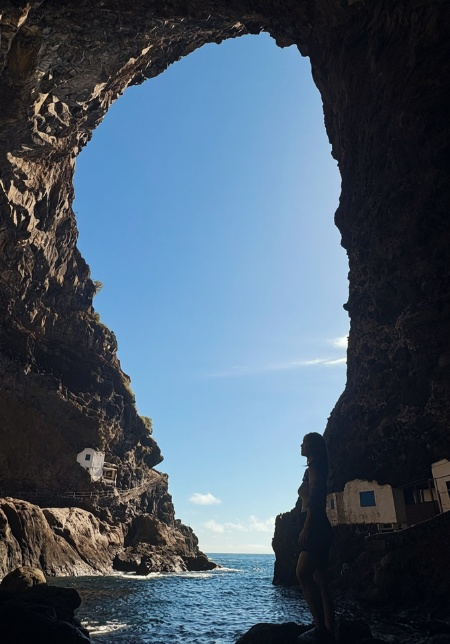
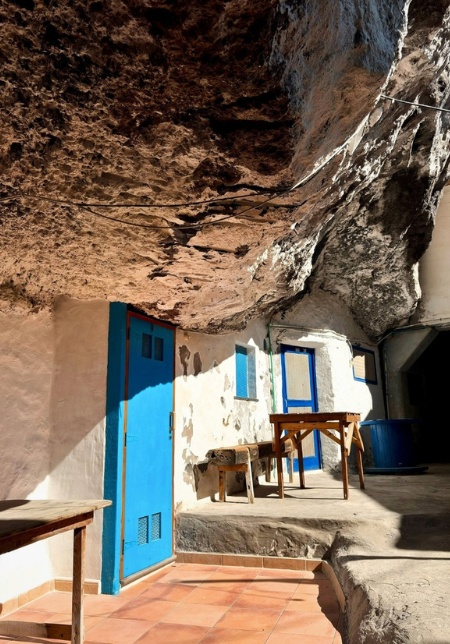
The settlement dates back to the 17th century, when the harbour here provided shelter for fishermen. The whole thing looks like a page from Robert Louis Stevenson’s Treasure Island, and according to local history, a place of refuge during pirate raids on the coast. The name “Poris” itself translates as “natural harbour”.
There’s a small whitewashed chapel of the Virgin of Candelaria, the patron saint of the entire Canary Islands. According to local legend, a statue of the Virgin appeared miraculously at this remote spot, and the shrine built in her honour has been tended and visited ever since.
Swimming at Poris de Candelaria
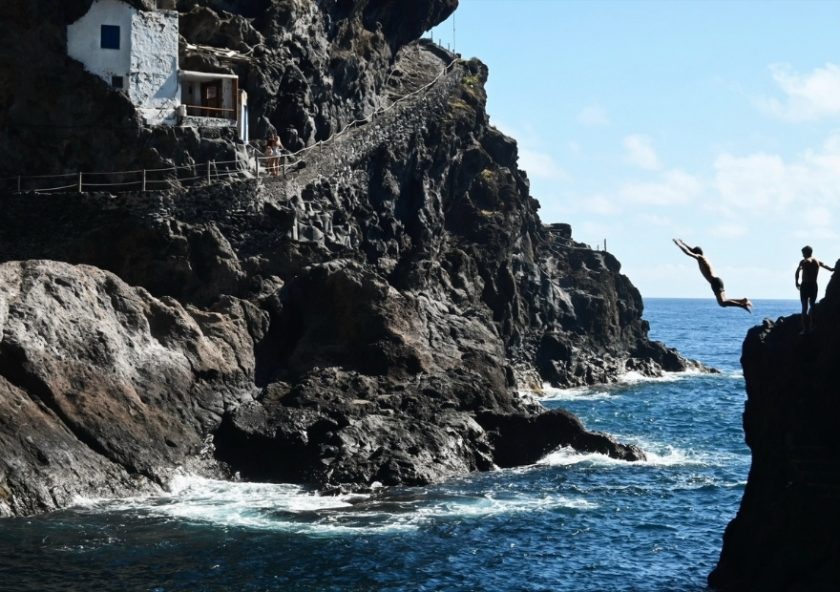
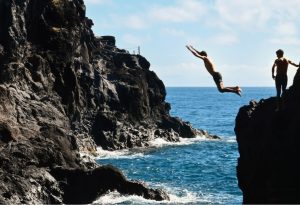
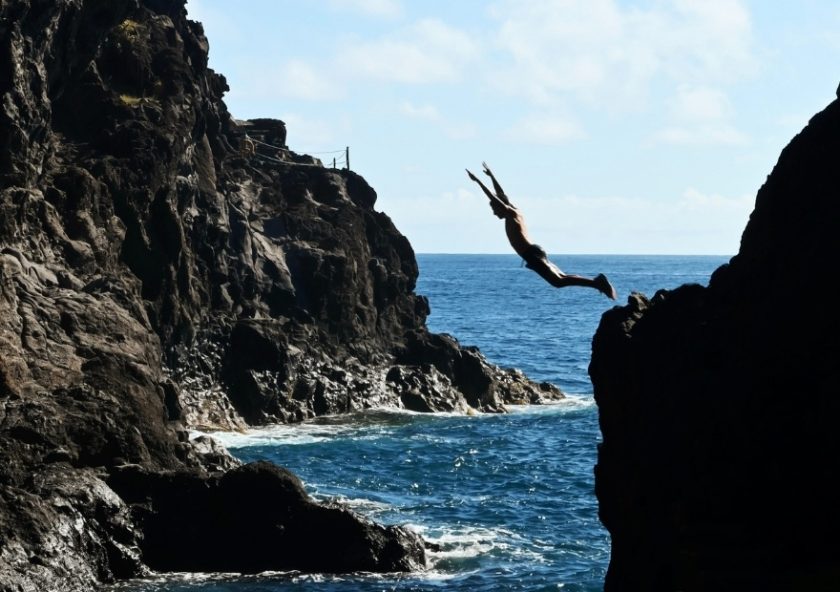
On the other side of the cove, a couple of young boys, stripped down to their swimming shorts climbed up to the edge of the cliff and dived into the middle of the cove. As they hit the water, a thundering sound reverberated through the cove. Mother Nature’s very own theatre by the water.
The boys swam back to shore, climbed back up the cliff, and jumped again. They did this repeatedly and I watched, regretting my decision not to bring my swimwear. Probably a good thing, as knowing me, I would’ve probably broken my back had I tried to follow their lead.
Return route back to Tijarafe
After soaking up the unique backdrop and special atmosphere, it was time to return back to Tijarafe. I passed the car park with a special kind of envy at the people who could just hop in their car.
Although the roads are narrow it’s definitely doable to drive to Porís de Candelaria. You might have to stop to let a car pass, but since the island isn’t very busy at all, there’s a strong chance that you’ll have the road to yourself. In any case, the road didn’t look as bad as we had imagined after reading the reviews. You just need to take it slow.
We hiked back the way we came, but it’s also possible to hike back up via the road. It’s longer and less relaxing, but it’s arguably easier and you also have the option to catch a bus a bit further up that takes you back to Tijarafe.
By the time I got back to the car, I must have sweated out half of my body weight. You can called me Sweaty Shing from now on. But was it worth it? Absolutely.
Want to know more? See my full list of things to do in La Palma which includes a wide range of unique attractions. For where to stay, I’ve put together this guide to Santa Cruz de La Palma, the island’s capital city.
How to get there: Visit Jet2 for more information about holidays to La Palma, including scheduled flights, departures, and accommodation.