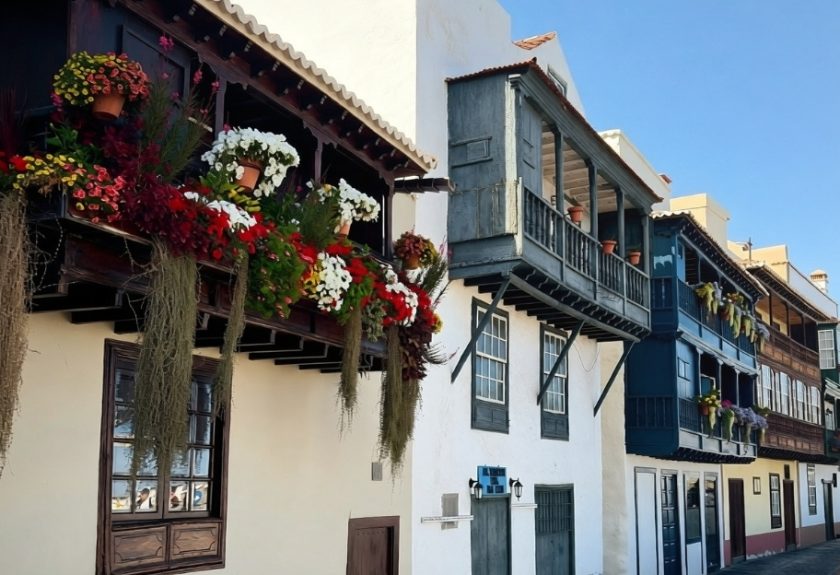
For such a small Island, La Palma manages to constantly surprise with a wide breath of attractions ranging from the cultural to the natural. The island’s capital city – Santa Cruz de La Palma – is no exception.
This pint-sized capital is a delightful concoction of historical buildings, impressive architecture, inviting cafes and the relaxing beachfront plants the proverbial the cherry on top. You can go from the museum to the beach in almost less time than it takes to tie your shoelaces.
Just home to around 15,000 people, the crowd-fearing among us can rest assured that you won’t need to search for peace and serenity because here it’s guaranteed. The atmosphere has a calm, unhurried quality that feels good for the soul.
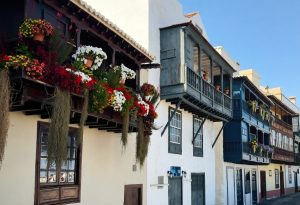
Santa Cruz de La Palma is incredibly easy on the eye. Its historic quarter is filled with Renaissance churches, grand merchant houses, and elaborately carved wooden balconies that have become the city’s signature image.
Where to stay
I stayed nearby at the lovely Hacienda San Jorge with Jet2. The hotel is located just 4.5 kilometres away from Santa Cruz de La Palma. By car you can get there in less than 10 minutes, alternatively, by foot you can follow the coastal path that takes you directly to the city in just under an hour.
The hotel is set within a lush garden and is home to a wide variety of plant species. There’s a lovely pool and directly outside the hotel faces out onto Playa de los Cancajos, so you certainly have your pick of options when it comes to relaxing under the sun.
If you’d prefer to stay directly in the city centre, there are a range of accommodation types to suit most budgets and preferences. For a full list of available options, I recommend browsing Booking.com.
Things to Do in Santa Cruz de La Palma
Despite its diminutive size, there are plenty of little gems and appealing spots to lull away the hours. The city is also situated close to many natural wonders all within a short drive which I have included at the end of this blog post.
For the full list of things to do across the whole island take a look at my La Palma Island Guide.
1. Avenida Maritima and the famous balconies
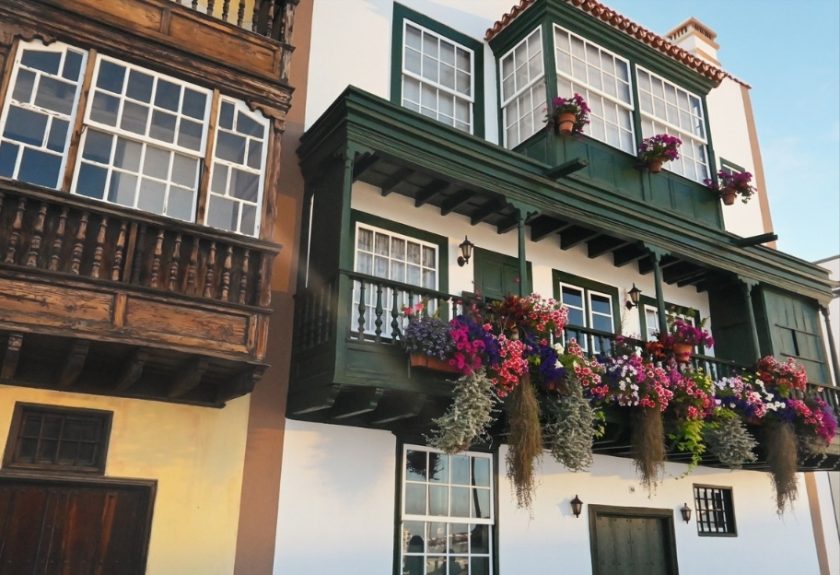
The thing you do first in Santa Cruz, because it’s impossible not to, is walk the Avenida Marítima. The seafront promenade stretches along the eastern edge of the old town, and it oozes with charm.
On one side, the Atlantic shimmers and laps the beach – on the other, a row of merchant houses from the 16th and 17th centuries sit as pretty as a postcard. I’m too embarrassed to admit how long I spent photographing these buildings, but let’s just say I got a bit carried away.
You can hardly blame me. Each facade is gorgeously painted in deep ochres, faded blues, and dusty pinks. The upper floors are accentuated with elaborately carved wooden balconies that define this city’s appreciation for craftsmanship. For the finishing touch, are an arrangement of flower beds that cascade over the edge as though they had been inspired by Rapunzel herself.
2. Plaza de España and the Old Town
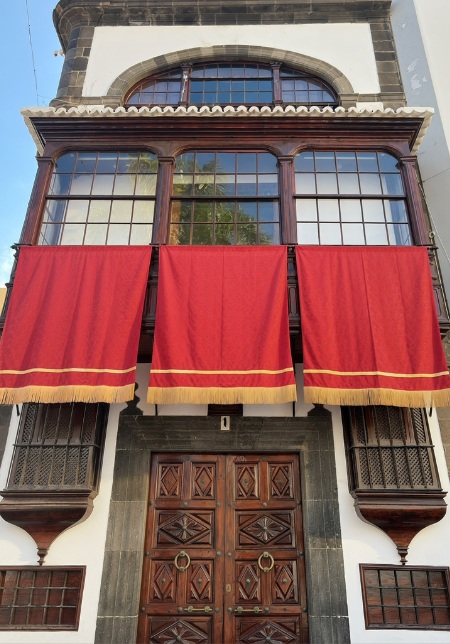
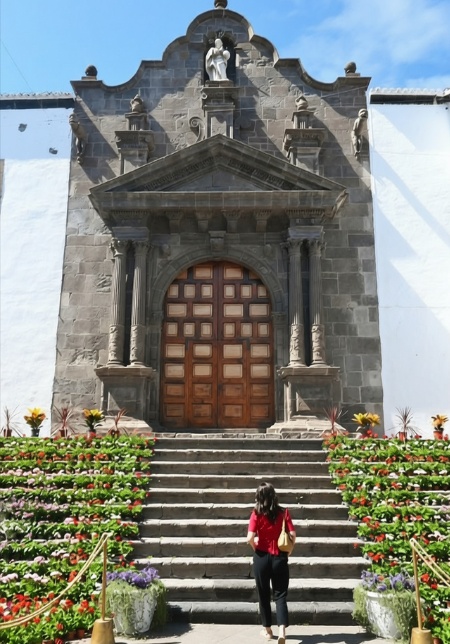
A short walk inland from the seafront brings you to Plaza de España, the heart of the old town and the place where the city’s finest buildings gather together.
The Church of El Salvador occupies one side of the square, a Renaissance structure that has been added to over the centuries but seamlessly enough that you’d never be able to guess. Step inside to see the wooden ceiling that has been expertly carved into an array of joyful patterns.
The former City Council building stands alongside, its double-arcaded Renaissance facade the kind of architecture that tells a story of bygone opulence. Now is probably a good time to mention a bit more about that.
The natural harbour made Santa Cruz de La Palma an essential stop on the trade routes connecting Spain, the Americas, and the African coast, and by the mid-16th century it had become one of the most important ports in the entire Spanish empire.
After, when the trade routes shifted and the empire retracted, the city settled into quieter times. So quiet it would be easy to forget if it weren’t for the architecture reminding you otherwise.
3. Barco de la Virgen (Naval Museum)
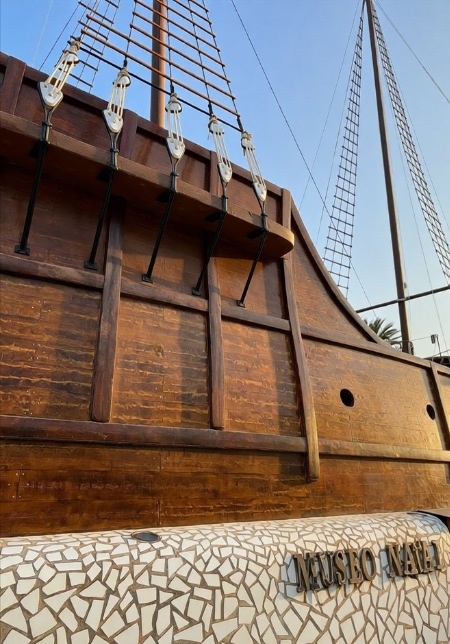
In the city sits a full-scale replica of the Santa María, one of Columbus’s three ships, built by descendants of local sailors and shipbuilders and housing the city’s Naval Museum inside.
This small museum covers La Palma’s role in the age of Atlantic exploration with will appeal to both adults and kids alike. Inside houses a nice collection of model-size boats and historical information. You can climb the deck to envision life on board all those years ago.
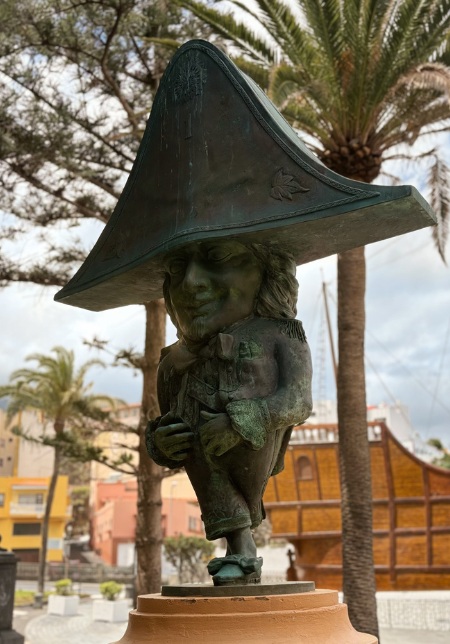
Don’t miss: The Monument to the Dwarf who sits in front of the ship. The figure, styled with a large Napoleonic hat, represents a traditional performer from La Palma’s historic Bajada de la Virgen festivities.
4. Castello de La Virgin Mary
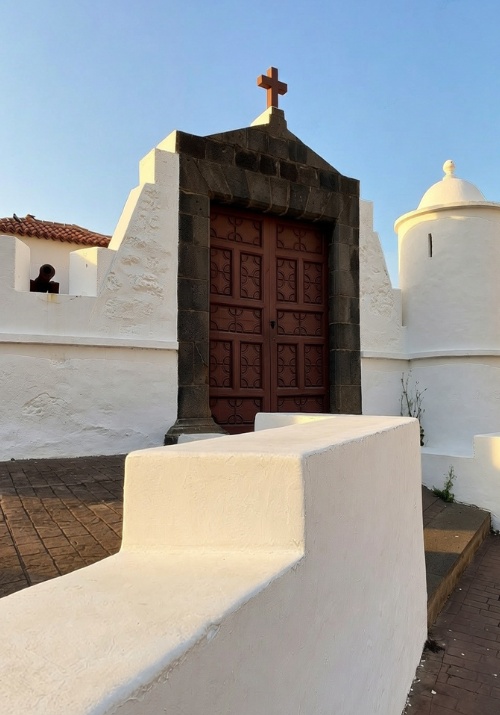
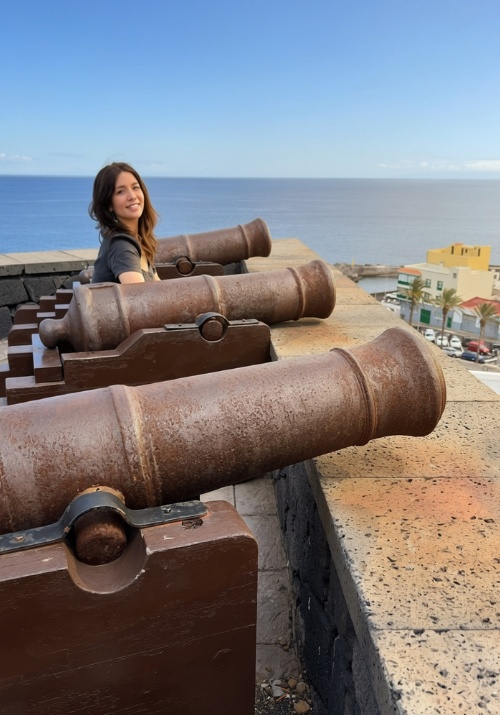
Built in the 17th century to defend the harbour against the pirate raids that were, by all accounts, a regular occupational hazard of Atlantic island life, the Castello de la Virgin Mary sits conveniently close to the Naval Museum and is worth a stop on the same visit.
The pirates were persistent, severely attacking the city, and this fortress played a vital role in defending the coastline. The cannons add a bit of drama, but the real draw is the view. It’s not hard to see why this stretch of water felt worth fighting for. Come for golden hour.
Tip: if the main entrance is closed, walk up around the side for access. Free entry.
5. Insular Museum
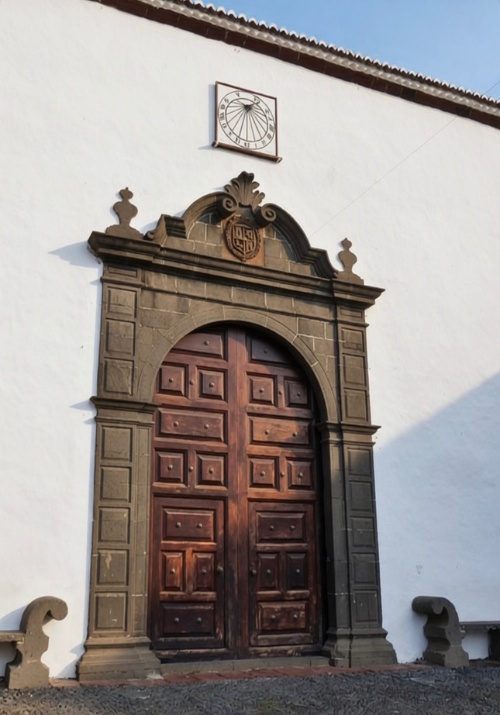
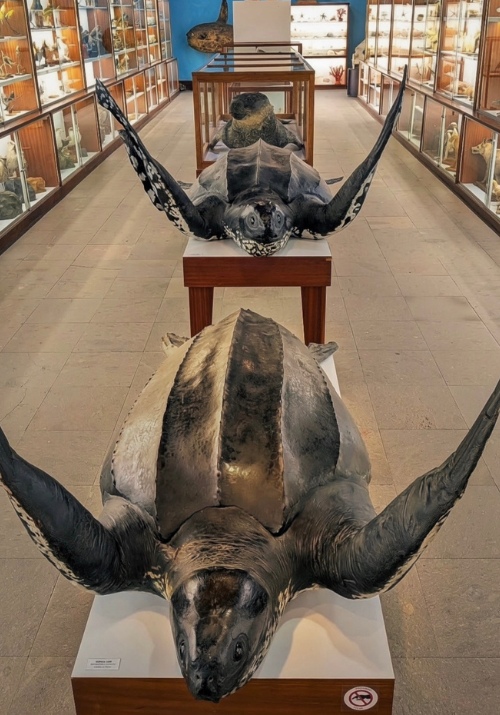
Housed in a 16th-century Franciscan convent arranged around a beautiful central cloister, the island’s main museum covers La Palma’s natural history, archaeology, and fine art.
The building alone is its own attraction, designed with the kind of care reserved for old religious architecture. The collection of local paintings was stronger than I expected, churning out unexpected gems like the two Joan Miro sketches that I almost missed. When it comes to the curation, it’s more “treasure-chest” as opposed to super neat and ordered. Personally, I think that adds to the charm.
Restaurants to try in Santa Cruz de La Palma
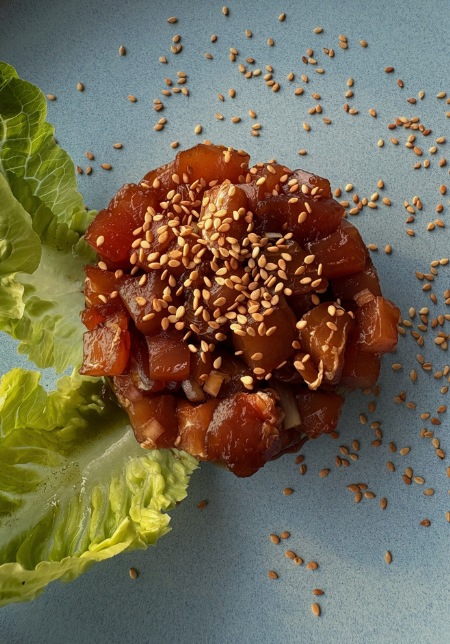
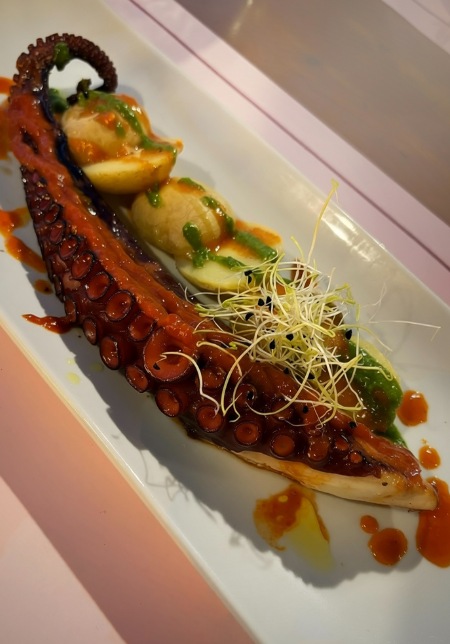
From no-frills tapas bars tucked into old town alleyways to proper sit-down restaurants with serious wine lists, the food here is rooted in Canarian tradition using fresh seafood, local herbs slow-cooked meats.
While the dining scene isn’t comparable to larger spanish cities, these places with keep your taste buds happy and wanting more.
- Tasca Luis: A proper local tasca with good value, generous portions. There isn’t a set menu, instead you order from a good old fashioned chalk-board which changes daily depending on seasonal ingredients – or whatever the cook feels like dishing up! The atmosphere is unfussy and relaxed, exactly what you what from a local joint, right?
- Hispano Exquiseces: If you’re a fan of Spanish ham, cheeses and wine, it doesn’t get much better than this place. For the best of the best, order Jamon Bellota. If you’re left wanting more, you can pick some up for the deli inside to bring back home.
- Restaurant El Lagar: This restaurant is a little out of town, but it’s worth it just for the paella. You have to order it a day in advance but it’s worth the wait. El Lagar does justice to traditional Palmeran cooking -think hearty dishes with real depth – while keeping things polished enough to feel special. You also can’t go wrong ordering the tuna steak or pulpo. Yum!
Day trip ideas from Santa Cruz de La Cruz
There are plenty of attractions to visit from Santa Cruz de La Palma, but to keep things simple, I’ve narrowed them down to four places. All of them are different and unique so there’s something for everyone.
Note: The first three places on the list are super easy to reach by car or taxi. The last suggestion takes a little longer and does involve some winding roads, but it’s worth it.
Playa Nogales
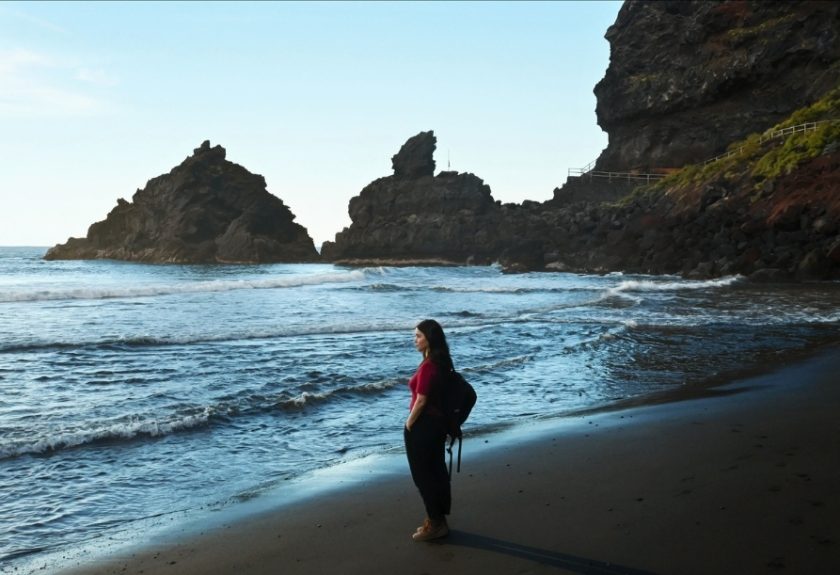
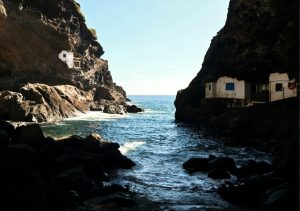
About 15 minutes north of Santa Cruz is Playa Nogales. It is considered by many (myself included!) as the most beautiful beach on the whole island. Getting there requires a short but adventure hike that’s enough to deter crowds and add to the reward of getting there.
The descent is via a well-marked path flanked by volcanic cliffs. What waits at the bottom is a sweep of black sand, impressive rock walls on either side, and the cinematic waves of the Atlantic rolling to your feet. It’s certainly not your average tourist beach with sun-beds and a beach bar.
La Fajana Natural Pools
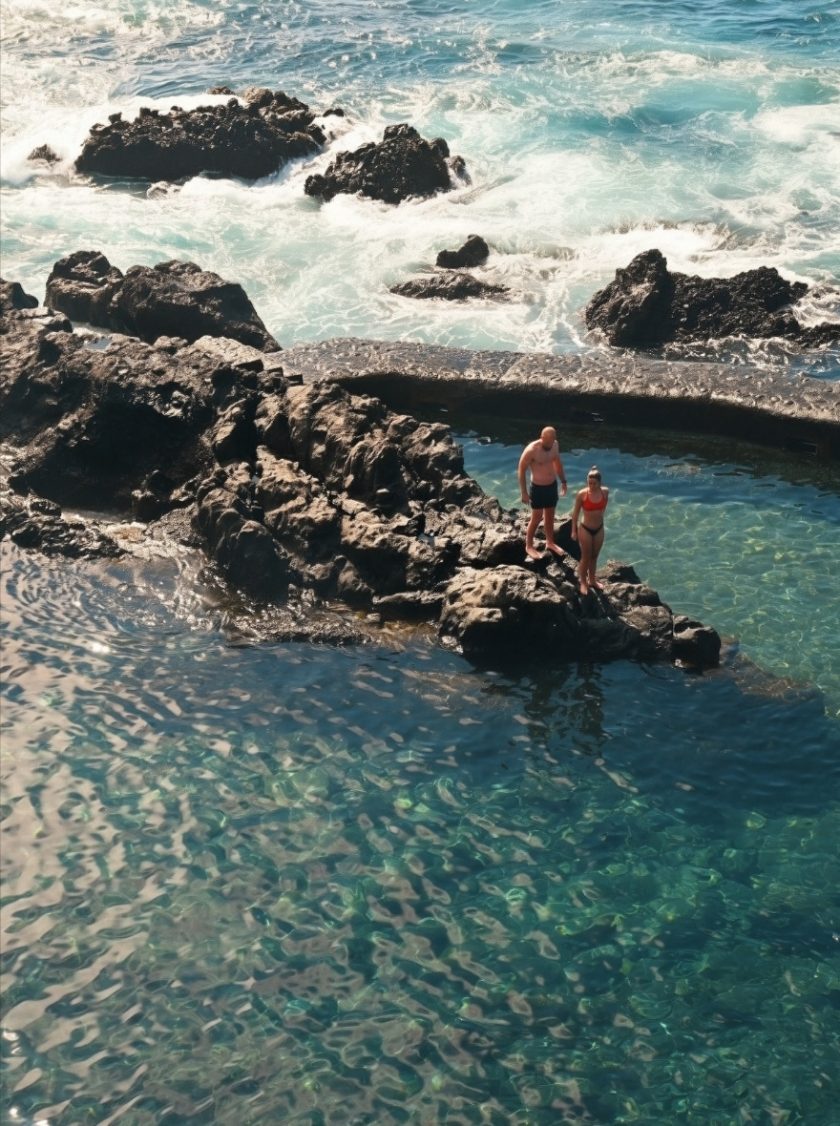
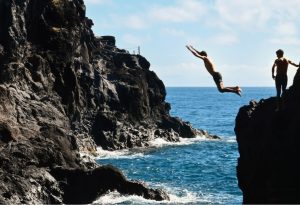
Pack your swimwear and get ready for some sweet relaxation. Around 45 minutes north of Santa Cruz (and on the same route as Playa Nogales), the natural pools at La Fajana are formed in the basalt rock at the edge of the sea, filled by the Atlantic and sheltered enough from the waves to swim in comfortably.
The water is a vivid turquoise blue against the black volcanic rock and is wild in a way that reminds you this is the Atlantic, not the Mediterranean. You could spent the whole day here relaxing and walking around the whole area.
On site there’s shower facilities and a lovely restaurant if you fancy staying until sunset. The drive through the banana plantations and laurel-forested hills of the north is, in itself, part of the experience. Believe me, you’ll have a tough time leaving this place.
Cubo de la Galga Laurel Forest Trail
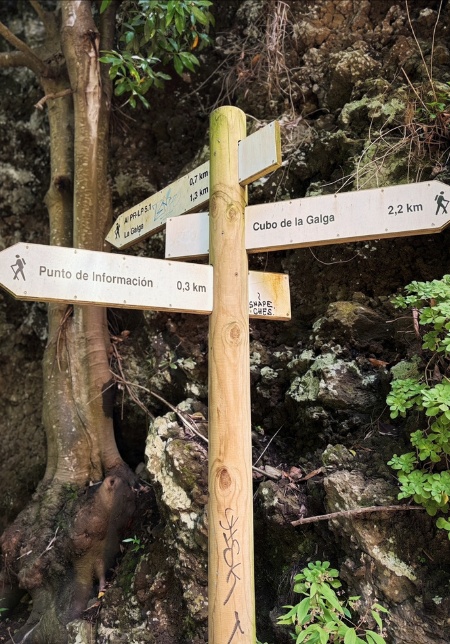
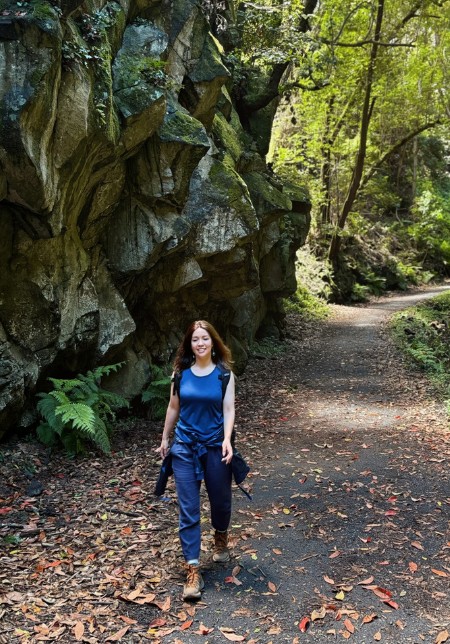
There are many hiking routes around La Palma. If you’re looking for something gentle, Cubo de la Gala is the trail for you. Easy to reach, the trail leads into one of the oldest and best-preserved laurel forests on the island.
The ecosystem here dates back to the Tertiary period. It disappeared from mainland Europe millions of years ago but managed to survive in the Canary Islands. The trees grow densely, the light filters through in long green shafts, and a mist frequently hangs over the canopy.
Distance: The shorter loop is around 5 kilometres and takes a couple of unhurried hours.
Roque de los Muchachos Observatory
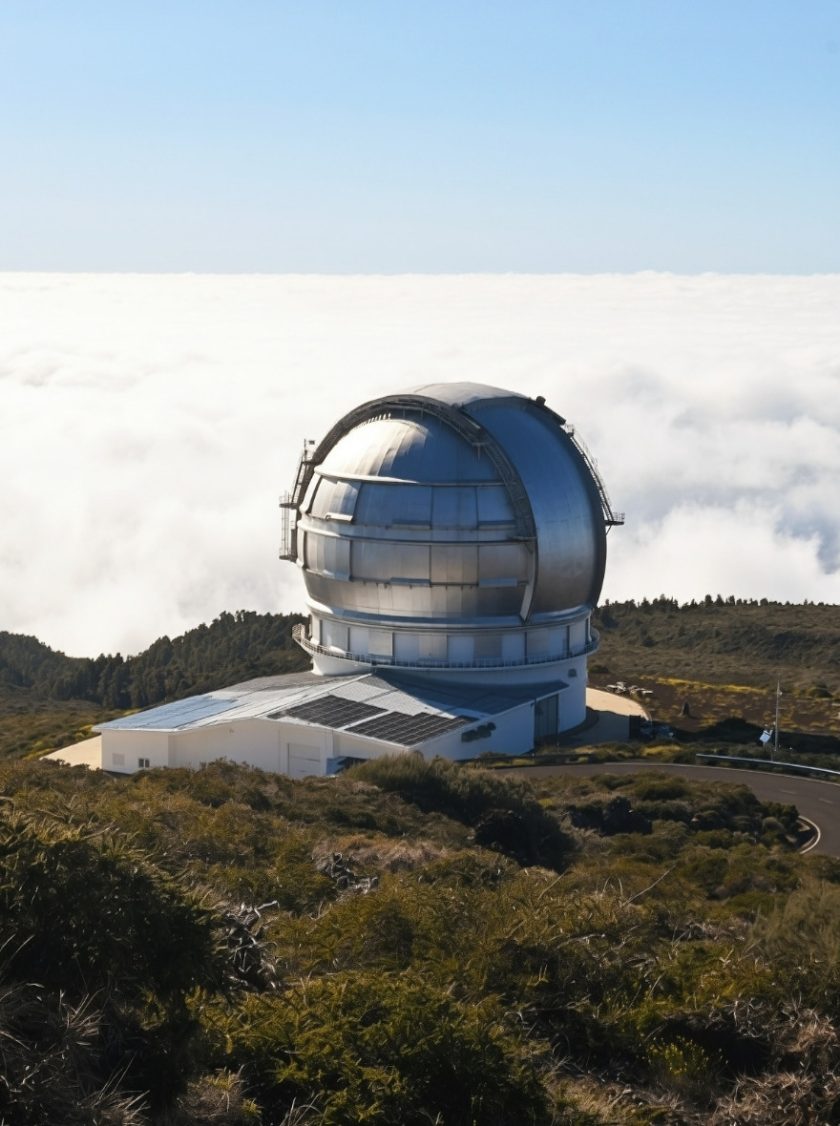
The world-famous observatory takes a bit longer to reach. You take a winding road up through the clouds to some of the highest points of the island.
An hour’s drive north of Santa Cruz de La Palma, journeying through pine forest and increasingly vertiginous scenery, the observatory sits at 2,400 metres on the island’s northern ridge, above the clouds. The Gran Telescopio Canarias, which lives here, is the largest single-aperture optical telescope in the world.
Daytime guided visits are available and don’t require a scientific background, just a sense of inquisitiveness. Bring warm clothes because the temperature at altitude is nippy.
If you can’t make one of the tours, I still recommend taking the drive up. You can still see the many observatories which look surreal against the clouds, like you’ve been invited to the opening of a modern art installation. The views are truly exceptional.