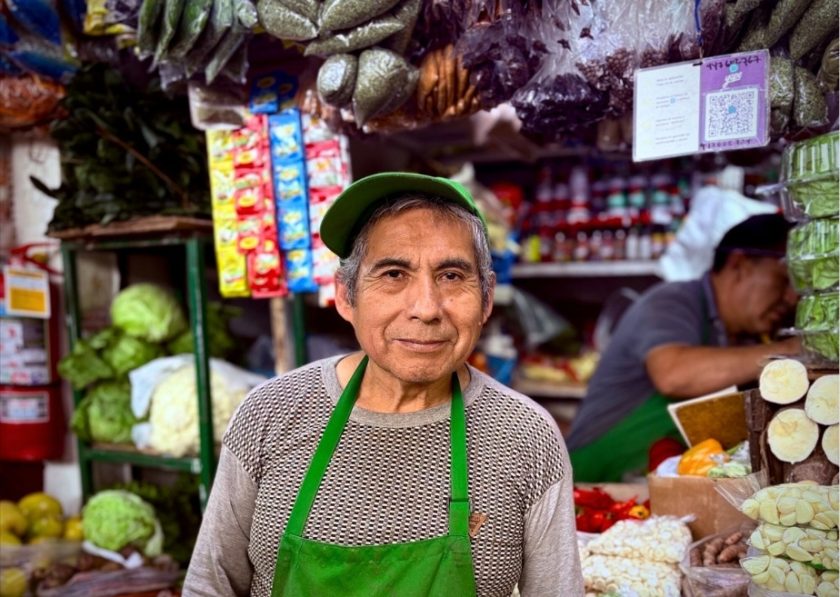
Are you thinking about doing a food tour in Lima? Hopefully my experience will whet your appetite enough to book one of Lima’s food tours because it’s absolutely something you should do in Peru’s capital city.
I’m now convinced that the best way to explore Peru is through your taste buds. It’s one of the great foodie destinations of the world and at the centre of it all is Lima, often dubbed the ‘Gastronomic Capital of South America’, where you can gorge yourself from morning till night. I’m not saying that you should do that, but I wouldn’t blame you if you did. I could barely stop myself even when I tried.
In Lima you can find the answers to Peru’s history, culture, and customs from your plate. Peruvian flavours are full of storytelling. Centuries of migration, trade, conquest, and adaptation.
You will find a mix of cultures: Andean, Chinese, Japanese, Spanish and Creole. Each culture brought distinct flavours, techniques, and ingredients and these blended into something unmistakably Peruvian.

Long before arriving in Peru, I knew about the country’s culinary reputation and couldn’t wait to experience it for myself. For the perfect introduction to Peruvian cuisine I opted to book a Lima food tour. Perhaps unsurprisingly, there’s a variety on offer ranging from cooking classes to restaurant hopping and from fruit sampling tours to specific dish and drink tours.
In the end I decided to go with this 13-flavour food tour through Lima’s historic old town. Unlike many cities in South America, the old streets around the Plaza Mayor aren’t some manicured postcard. They’re sweaty, loud, unvarnished, and entirely alive. If I needed an expert to help me navigate Lima’s streets, it’s definitely this area.
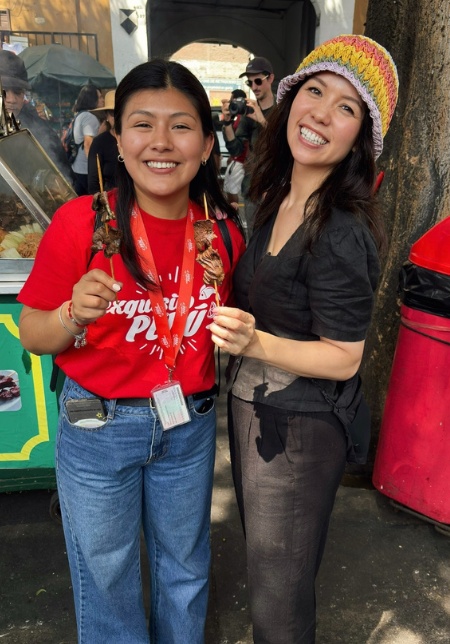
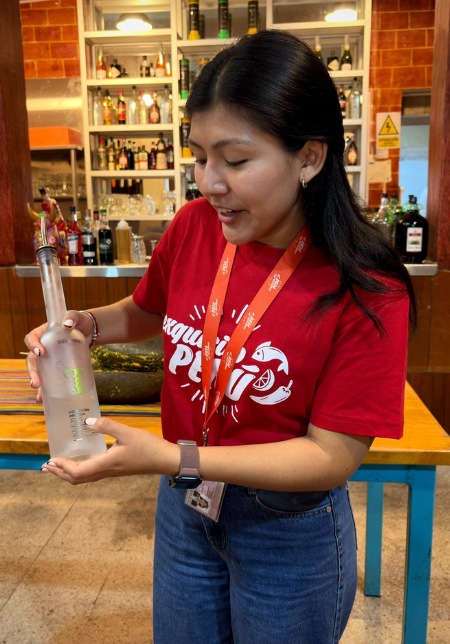
Thankfully, on this occasion, we had the wonderful Aura – Lima’s unofficial best tour guide – to lead us the way. Here, Peru’s chaotic, beautiful culinary DNA is laid bare.
Highlights from my Lima food tour
Papa a la Huancaína
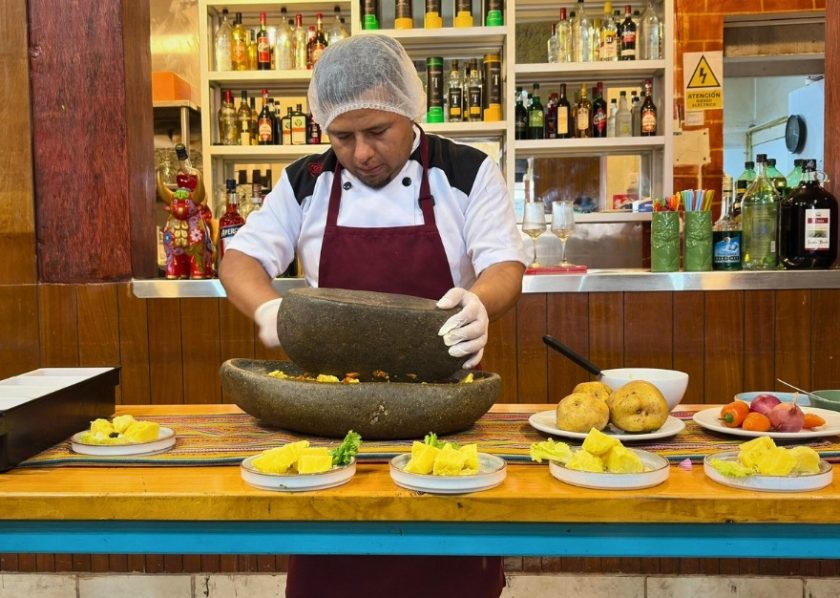
The tour began fittingly with Huancaína sauce, one of Peru’s most beloved creations. Our small group gathered around a mortar and pestle as a cook showed how it’s really done – grinding fresh queso fresco, bright ají amarillo peppers, garlic, and oil until it becomes a thick, orange golden, paste with a kick.
No blenders, no shortcuts, just muscle and rhythm. Aura told us it had to be done this way to allow all the flavours to fully come out and merge together. Blenders just won’t cut it!
Then comes the reward: Papa a la Huancaína, boiled potatoes smothered in that warm, velvety sauce. It’s simple, but it’s the kind of simplicity that has soul. Just humble ingredients transformed by history and technique. I’m pretty sure that Peruvians see it as comfort food – it certainly made me feel all cosy.
Chicharron sandwich
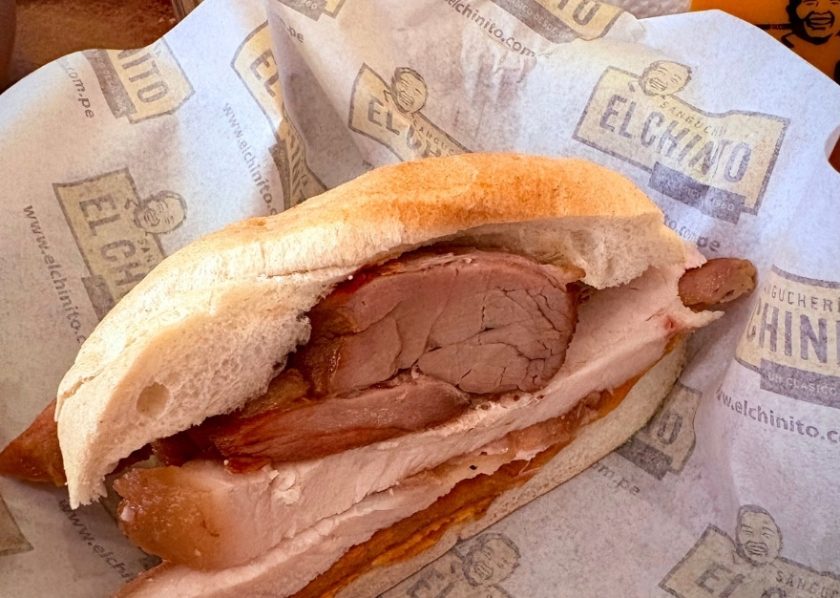
With our palate now awake, the tour spilled into the streets. Along the way, Aura doubled as a history guide pointing at interesting buildings and architectural features. We took a detour to peak inside the Basilica and Convent of Nuestra Señora de la Merced noted for its striking baroque facade.
Our next fuel came in the form of the Chicharrón sandwich, a simple your scrumptious combination of crispy pork, sweet potato, and salsa criolla tucked into a crusty roll. It’s breakfast that satisfies. I took a bite and wondered where it had been my whole life. It’s up there with the Vietnamese banh mi for my favourite sandwich of all time.
Mercado Central
Then came Mercado Central, the heart of it all – a pulsing organism of fishmongers, poulterers, greengrocers and locals weaving through aisles with crates of limes, and old men drinking coffee so strong it could power a bus.
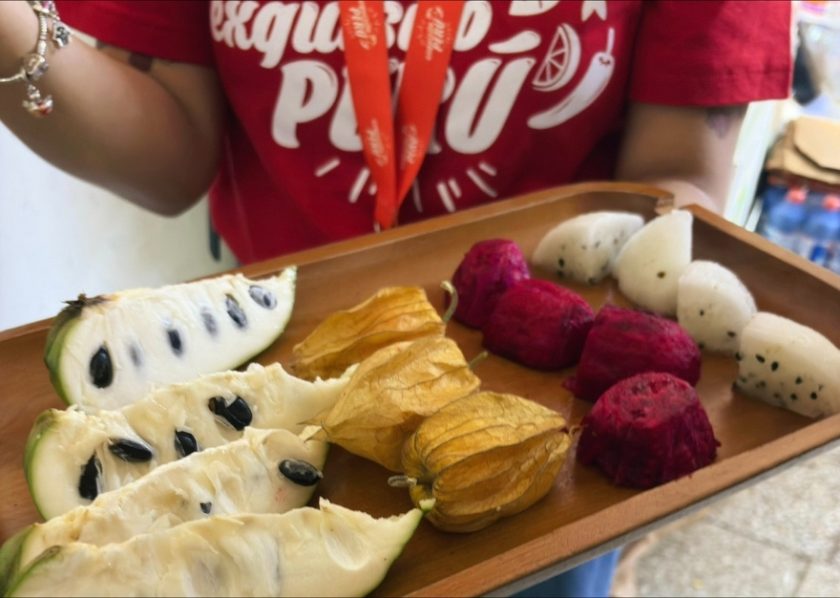
Here, we followed Aura through the crowd to sample chirimoya, a creamy, fragrant fruit that tastes like someone crossbred a pear with vanilla custard. Peruvians call it the “queen of fruits,” and in that moment – standing under fluorescent lights while vendors haggled around us – I could not have agreed more.
Recommended: If you want to see more food markets in Lima, make your way to Mercado de Magdalena. Also nearby is the Larco Museum, home to finest collection of artefacts from Pre-columbian art. Simply not to be missed.
Ceviche and ‘Tiger’s Milk’
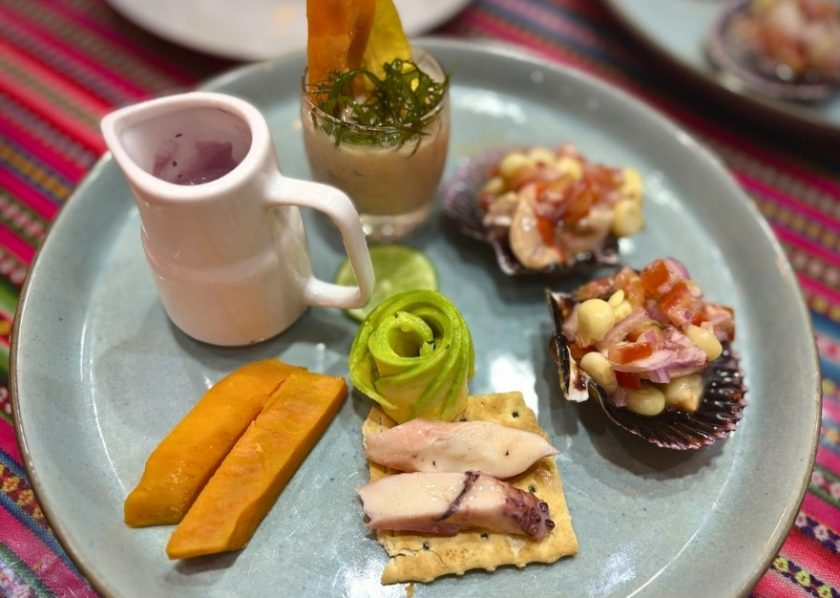
Seafood called next, and Lima truly does it best. We slipped into a local cevichería, sat down and within a few seconds, we were each presented with an appetising seafood platter.
There was ceviche, Peru’s national dish. Raw fish cured in lime juice so sharp it wakes your whole nervous system – which works well in the morning.
But the real revelation came in the shot glass: leche de tigre, the “tiger’s milk,” that salty, citrusy, spicy elixir Peruvians swear can cure hangovers. It’s the equivalent of a Bloody Mary in England, only no alcohol is needed – the spice is enough to wake the dead.
Last on the plate, we demolished a scallop ceviche which consists of fresh scallops, lime juice, finely diced red onion, minced chili, salt, and pepper.
Sweet treats: picarones and churros
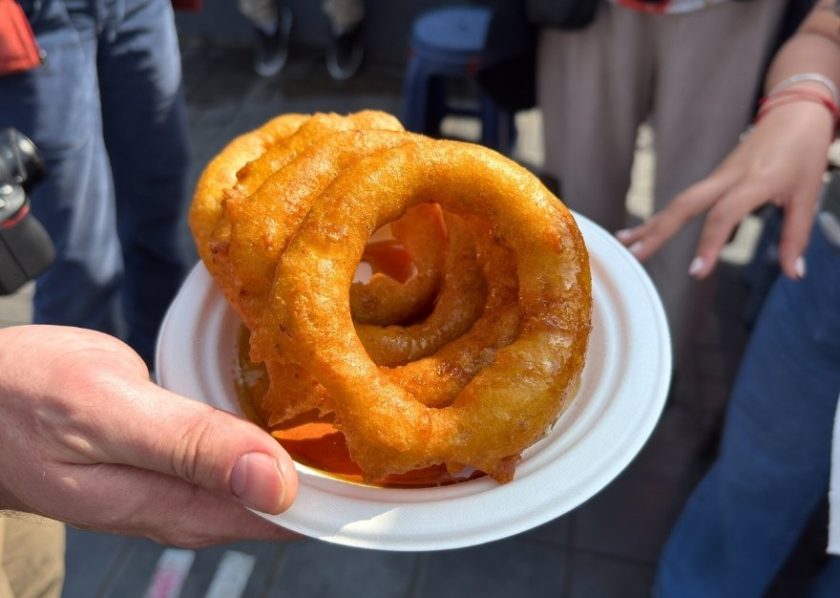
As the afternoon heat rolled in, the tour moved through old arcades and sun-washed plazas. And just when we thought we couldn’t eat more, we smelled picarones – pumpkin-and-squash dough rings frying in bubbling oil, then drowned in a dark syrup of chancaca sugar. They’re messy, hot, sticky in the best way.
Nearby, we wrapped up our tour with churros stuffed with manjar blanco, Peru’s dangerously addictive caramel. One bite and you understand why people queue for them even in the blazing sun.
By the time the tour winded down, the historic centre felt different. I wouldn’t say calmer – but more familiar, like a place that’s shown you its secrets. Of course, with the help of Aura, our most fantastic guide.
Drinks: chicha morada and Inca Kola
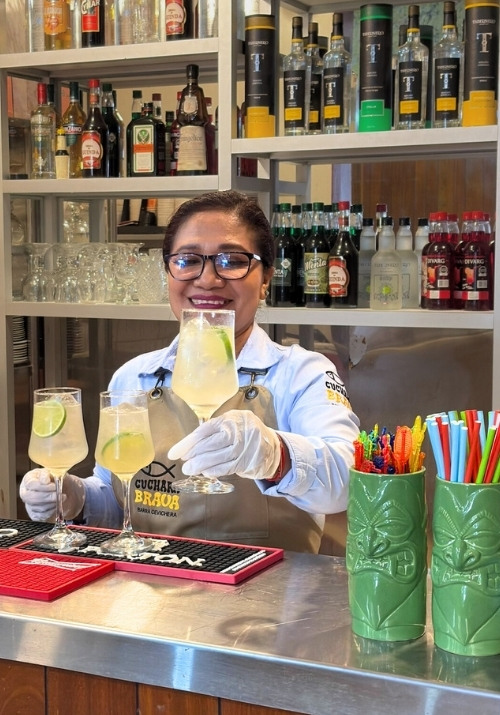
While everyone knows Pisco Sour, there’s also Chilcano, a cocktail made with pisco, lime juice, ginger ale. It’s a bit lighter because it doesn’t contain egg which makes it a popular choice among locals. I’m not a big drinker so downing a cocktail in the morning made my cheeks a little flush. I’m definitely what you would call a light-weight!
Then there’s chicha morada, made from purple corn, pineapple, cinnamon, and cloves. It’s sweet, spiced, and non-alcoholic. You will find it sold everywhere from markets to family kitchens. It’s my favourite drink in Peru – be sure to try it!
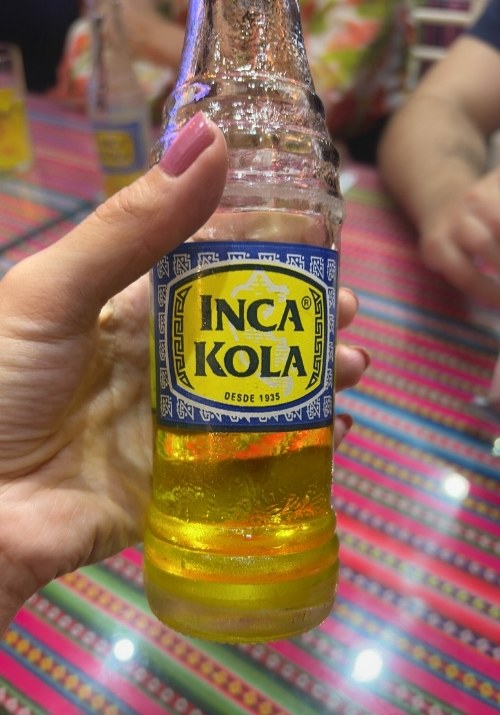
And finally, there’s Inca Kola which stuns you with its bright yellow appearance and very sweet taste vaguely resembling bubblegum! While I wasn’t a huge fan, it’s loved by locals. In Peru, it outsells Coca-Cola, which tells you everything you need to know.
For more food adventures from around the world, feel free to get a mouthful of my other foodie posts.
If you’re planning to visit Peru, take a look at my other blog posts: